
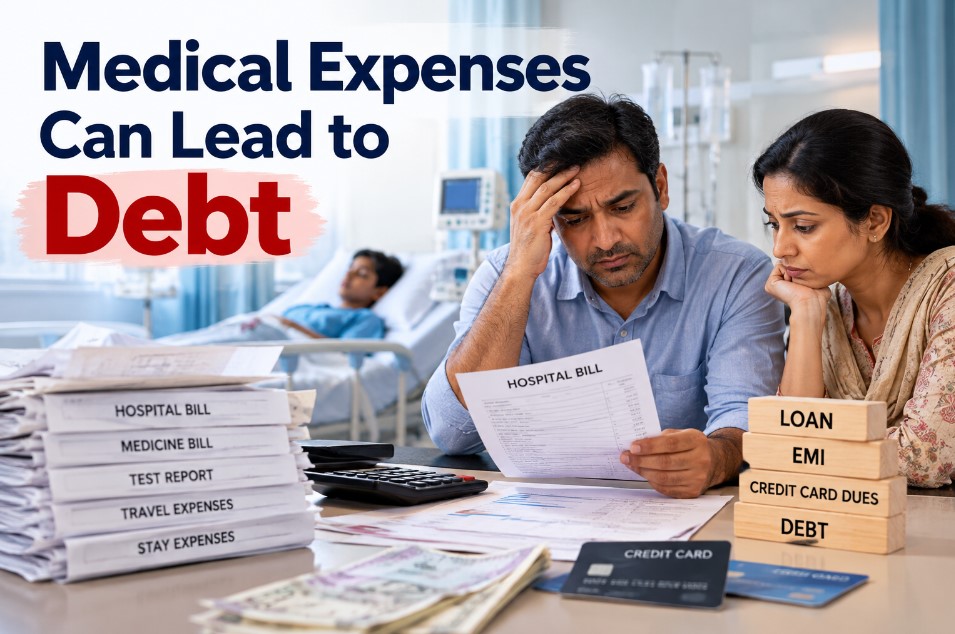
Medical emergencies can create a major financial burden for families. Apart from the cost of treatment, patients and their families may also spend money on medicines, travel, accommodation and other related expenses.
Recent data reported from the National Statistical Office (NSO) shows the scale of healthcare-related travel in rural India. Around 38.4% of overnight trips made by rural households were related to medical treatment. The average expenditure on a rural health-related trip was reported at around ₹29,454.
For families with limited savings, such expenses can create financial pressure. When savings are not enough, people may depend on borrowing, credit cards or loans to manage urgent medical costs. Over time, this can contribute to medical debt in India.
How Medical Expenses Can Create Debt
Medical expenses do not always end with the hospital bill. A serious health problem can involve several additional costs.
These may include:
- Hospital and treatment charges
- Medicines and medical tests
- Travel to another city for treatment
- Accommodation for family members
- Follow-up consultations
- Loss of income during the treatment period
- Long-term medication expenses
When these expenses continue for a longer period, household savings may become insufficient. Some families may then use credit cards or take a personal loan to manage the expenses.
This is one reason why medical expenses and debt can become connected for households already facing financial pressure.
Medical Expenses and Loan Burden
Taking a loan during a medical emergency can provide short-term financial support, but the repayment obligation continues after the treatment.
For example, a person may borrow money to pay hospital expenses and later have to manage:
- Monthly EMI payments
- Credit card payments
- Existing loans
- Household expenses
- Ongoing medical costs
If income is affected during or after the treatment, managing multiple financial obligations can become difficult.
This can result in a growing loan burden due to medical expenses.
What Happens When Loan Repayment Becomes Difficult?
A borrower should first assess their complete financial situation and communicate with the lender if repayment is becoming difficult.
Depending on the loan type, lender and individual circumstances, borrowers may have different options. These can include restructuring or other repayment arrangements offered by the lender.
In some cases, when a borrower is facing prolonged financial difficulty and is unable to repay the full outstanding amount, loan settlement may be discussed with the lender.
Loan settlement generally involves an agreement between the borrower and lender to close the outstanding loan for an agreed settlement amount. The terms are decided by the lender and depend on the borrower’s circumstances.
Can Medical Expenses Be a Reason for Financial Difficulty?
Yes, medical expenses can be one of the factors behind financial difficulty, especially when treatment costs are high and household income or savings are limited.
However, medical expenses are not the only reason a person may face debt problems. Job loss, business losses, reduced income, family emergencies and other unexpected expenses can also affect repayment capacity.
Therefore, borrowers should look at their complete financial position before deciding how to manage their debt.
What Should You Do If Medical Expenses Have Increased Your Debt?
If medical expenses have contributed to your financial difficulties, start by calculating your total outstanding debt.
Check:
- Total loan outstanding
- Monthly EMI obligations
- Credit card dues
- Current monthly income
- Essential household expenses
- Current medical expenses
- Available savings
This gives you a clearer picture of your repayment capacity.
You should also keep records of your medical bills, loan documents and repayment history. If repayment is becoming difficult, communicating with the lender early can help you understand the available options.
Understanding Loan Settlement
For borrowers who are facing genuine and prolonged financial hardship, debt settlement or loan settlement may be an option to discuss with the lender, depending on the circumstances.
Settlement is not the same as regular repayment. It can also have consequences for the borrower’s credit history and future access to credit. Therefore, borrowers should understand the terms and possible impact before entering into a settlement agreement.
At Settle Loan, borrowers can understand their debt situation and explore available debt-resolution options based on their individual circumstances.
Conclusion
The rising cost of medical treatment can put significant financial pressure on households. NSO data showing that a large share of rural overnight trips are related to medical treatment highlights how healthcare can involve substantial travel and expenditure.
When medical expenses consume savings or lead to borrowing, managing existing EMIs can become more difficult. In such situations, understanding repayment options and available loan settlement solutions can help borrowers make informed financial decisions.
If medical expenses have contributed to your financial difficulties and you are struggling with existing loan repayments, you can contact Settle Loan to understand your available options.
Source: National Statistical Office (NSO) data, as reported by Business Standard.