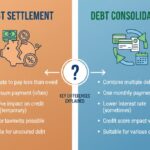

When you’re facing a financial crunch, you might be considering two very different options: getting a loan top-up to get more cash or a loan settlement to get out of debt. Both options seem to offer a solution, but they are designed for completely different financial situations. Choosing the wrong one could lead to a far worse outcome.
At Settle Loan, we believe the most important question is not “What do I do?” but “What is my goal?” The answer to that question will tell you which path to take.
Understanding a Loan Top-Up
A loan top-up is an additional loan amount provided by your current lender, typically on top of an existing loan like a home or personal loan. It’s designed for someone who has a healthy financial track record and needs extra funds.
- Your Financial Situation: You must have a good credit score and a consistent history of paying your EMIs on time. You are financially stable and are simply looking for a convenient way to get extra funds.
- The Bank’s Perspective: A bank offers you a top-up because you are a trusted customer. They see you as a low-risk borrower who can handle the extra debt.
- Impact on Your Credit Score: A loan top-up, if managed responsibly, can actually have a neutral or even positive effect on your credit score, as it adds a new credit line to your report.
When to Choose a Loan Top-Up:
Choose a top-up if you are financially stable, need extra funds for a specific purpose (like home renovation, a child’s education, or a medical expense), and you are confident you can comfortably handle the increased EMI.
Understanding a Loan Settlement
A loan settlement is a negotiated agreement with your lender to close your loan by paying a lump-sum amount that is less than the total outstanding debt. It is designed for someone who is in severe financial distress and can no longer afford to pay their loan.
- Your Financial Situation: You are struggling to make ends meet due to a job loss, business failure, or other unforeseen crisis. You are already defaulting on your loan or are on the verge of it.
- The Bank’s Perspective: A bank considers a settlement because they have concluded you cannot repay the full amount. They see a settlement as a business decision to cut their losses and recover at least a portion of the debt, rather than getting nothing at all.
- Impact on Your Credit Score: A settlement has a severe and lasting negative impact on your credit score. Your account will be marked “Settled” for up to 7 years, which tells future lenders you failed to fulfill your original loan obligation. This will make it extremely difficult to get a loan in the future.
When to Choose a Loan Settlement:
Choose a settlement if you are in a genuine financial crisis and believe you will not be able to repay your loan as per the original terms. A settlement is a strategic way to get out of an unmanageable debt and avoid the even more catastrophic consequences of a complete default or bankruptcy.
The Crucial Financial Decision
The choice between a top-up loan and a loan settlement is a critical crossroads.
- If you are financially struggling, a top-up loan is NOT the answer. It’s a dangerous trap that simply adds to your debt burden, making your already unmanageable situation even worse. You are essentially taking on a new loan to service an old one, which is a recipe for a debt spiral.
- If you are financially stable, a loan settlement is NOT a choice you should make. Settling a loan you could have paid will destroy your credit score for no reason, closing off all future access to credit.
At Settle Loan, we help you find the right path. For those who are in distress and facing overwhelming debt, we are the experts who can help you navigate the settlement process, negotiate a fair deal, and secure the legal documentation you need for a debt-free future.
Don’t add to your problems. Resolve them. Contact us today for a free consultation and let us help you find the strategic solution that is right for your unique financial situation.