
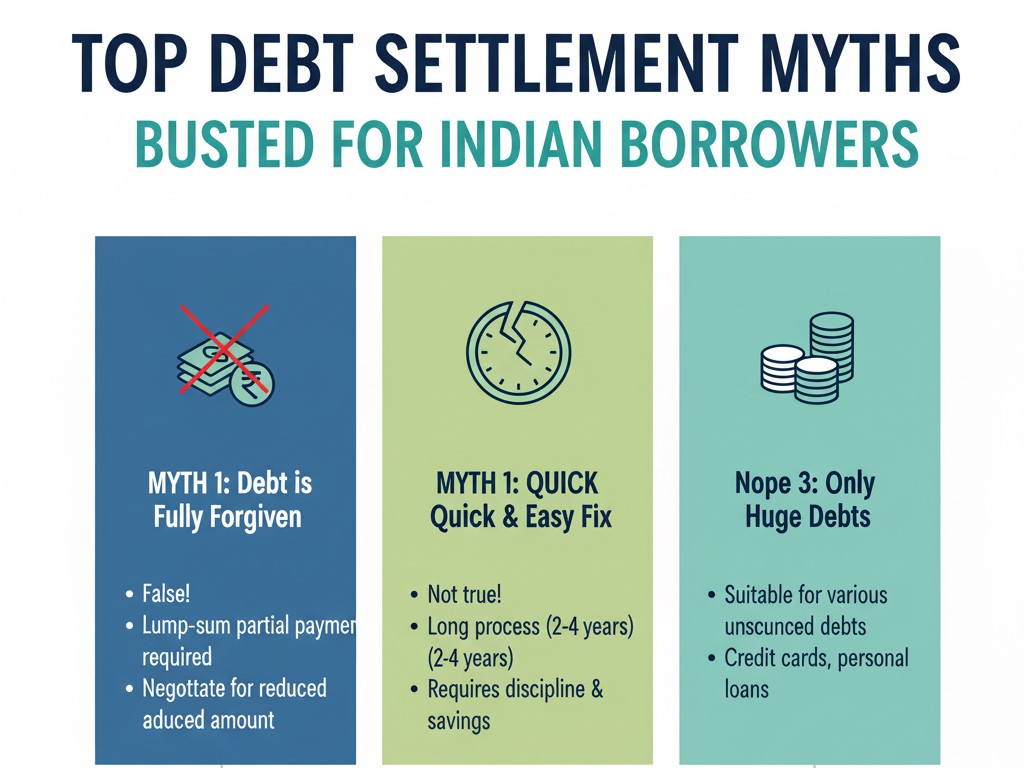
If you’re drowning in debt, the idea of a debt-free future seems like a distant dream. You may have heard about debt settlement—a powerful strategy to negotiate your total outstanding amount down to a lesser, affordable lump sum.
However, the world of debt relief is rife with misinformation, especially in India, where borrowers are often misled by both aggressive collectors and ill-informed advice.
It’s time to separate fact from fiction. Here are the top debt settlement myths busted, empowering you with the knowledge to make an informed decision and achieve a debt-free life.
MYTH 1: Debt Settlement is Illegal or a Fraudulent Activity.
FACT: Debt settlement is a 100% legal and legitimate financial strategy recognized under Indian contract law.
It is a voluntary agreement between a borrower and a creditor (bank or NBFC) where the creditor accepts a reduced amount to resolve a debt, particularly when the borrower is facing financial hardship and the risk of complete default is high. Banks actively engage in this process to recover what they can, often preferring a settled amount over a lengthy and costly legal battle with an insolvent borrower.
MYTH 2: Banks Never Agree to Settle a Debt.
FACT: Banks routinely settle debts, especially Unsecured Loans (like Credit Cards, Personal Loans, etc.).
A bank’s primary objective is to recover funds. If a borrower has defaulted and demonstrated genuine financial distress, the bank’s Loss Mitigation department will often view a settlement as the most practical option. They weigh the cost of a long, drawn-out recovery process (legal fees, recovery agent costs, time) against the benefit of receiving a lump-sum settlement today. They settle when it makes good business sense.
MYTH 3: You Have to Pay Huge Fees Upfront to Start a Debt Settlement.
FACT: Reputable and legally compliant debt settlement agencies and law firms do not charge substantial upfront fees.
In many countries, including the US, laws regulate when a debt relief company can charge a fee. While an initial consultation fee might apply for a detailed legal opinion, legitimate companies structure their major service fees to be payable only after a settlement is successfully reached and you have made the first payment towards the settled amount. Be wary of any company demanding a large sum before any work has been done.
MYTH 4: Debt Settlement is the Same as a Debt Consolidation Loan.
FACT: These are fundamentally different strategies with very different outcomes.
Debt settlement aims for a fresh start by reducing your debt, while consolidation aims to make the full debt more manageable.
MYTH 5: Your Credit Score is Ruined Forever After Settlement.
FACT: While debt settlement does cause a severe negative impact on your credit score (CIBIL score), the impact is not permanent, and a settlement is often the best path to rebuilding your score.
In fact, if you are considering settlement, your credit score is likely already severely damaged due to defaults and missed EMIs. Settling the debt, rather than letting it sit as an unresolved default, marks the beginning of the recovery process. Once the debt is marked ‘Settled’ with a ₹0 balance, you can begin to build a new, positive credit history. The black mark of the settlement will eventually fade, but the freedom from debt is immediate.
MYTH 6: You Can Go to Jail for Debt Default and Settlement.
FACT: You cannot go to jail in India for the civil offense of defaulting on a normal commercial debt (credit card, personal loan, etc.).
Debt settlement is a mechanism to resolve default. Banks may threaten legal action (a civil suit for recovery), but they cannot initiate criminal proceedings (which lead to jail) unless a clear case of fraud is proven. Settlement is a way to stop both the threat of civil litigation and the harassment from recovery agents.
The Road to Debt-Free Living Starts with Truth
The stress of unmanageable debt is real, and the tactics of debt collectors often rely on fear and misinformation. By understanding the truth about debt settlement, you can move past the confusion and strategically address your financial crisis.
Debt settlement is a powerful tool for Indian borrowers to achieve real EMI relief, stop harassment, and secure a path back to financial freedom.
Don’t let myths hold you back. Consult with a specialist today to evaluate your financial situation and determine if debt settlement is your ideal solution for a debt-free future.