
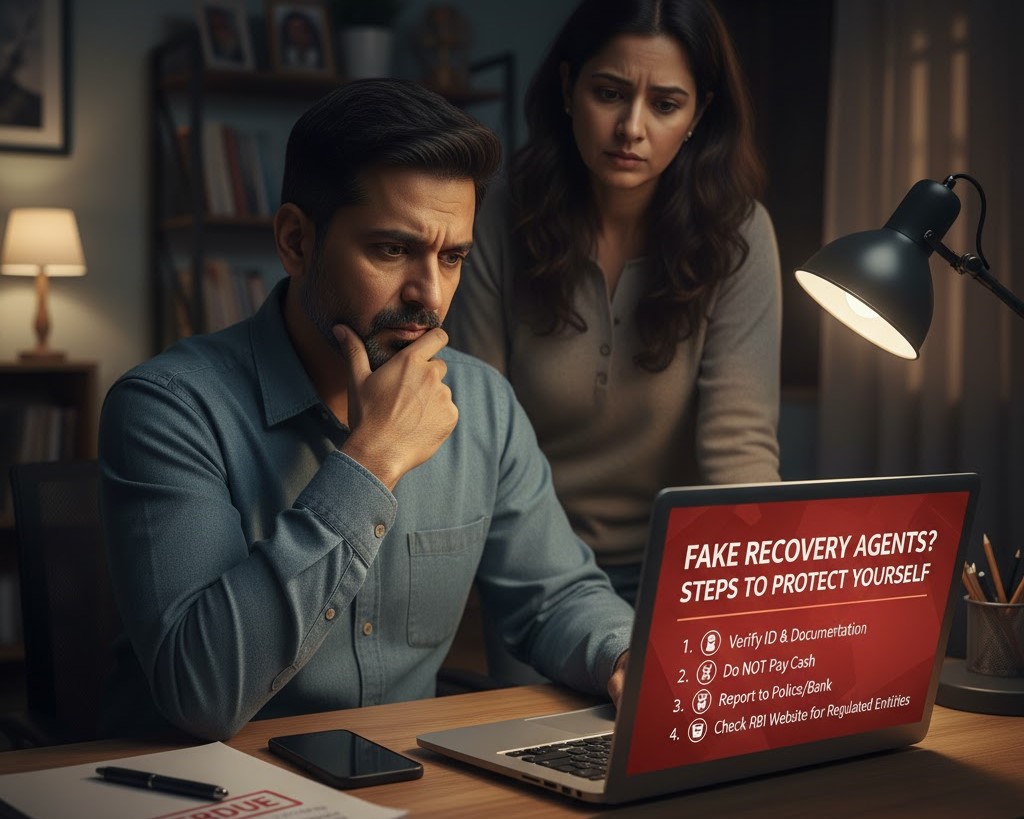
The financial burden of a loan default is difficult enough without the added stress of aggressive or even fraudulent recovery tactics. Unfortunately, the rise of unauthorized and fake recovery agents is a serious threat, designed to intimidate borrowers and fleece them of money.
If you are a borrower navigating loan repayment challenges, vigilance is your first line of defense. At Settle Loan, we empower you with the knowledge to identify fraud and the resources to fight back.
5 Red Flags: How to Identify a Fake Agent
Banks and legitimate Non-Banking Financial Companies (NBFCs) are required to follow strict guidelines regarding debt collection. Any deviation from these rules is a major warning sign.
The biggest red flag of a fake agent is a demand for cash payment or a transfer to a personal UPI ID/bank account to “settle the debt.” NEVER pay into a personal account.
4 Crucial Steps Borrowers Must Take Now
If you are contacted by a suspicious individual or face harassment, you must take immediate, documented action to invoke your Borrower Protection rights.
Step 1: Demand and Verify Identification
Do not engage in any conversation or negotiation until you have verified the agent’s identity.
- During a Call: Ask for the agent’s full name, employee ID, the name of the recovery agency, and a reference number for their authorization letter.
- In-Person Visit: Demand to see their ID card and the official authorization letter from your bank/NBFC. Use your phone to take a photograph of their ID and the authorization letter.
- Immediate Action: If they refuse to provide proof or their ID appears fake, terminate the call or visit immediately. Do not argue or offer any personal information.
Step 2: Document Everything (The Fraud Alert Protocol)
Your documentation is your legal evidence.
- Keep a Log: Immediately start an Agent Harassment Log. Record the date, time, duration, phone number, the agent’s name, and the exact nature of the threat or abusive language for every interaction.
- Save Digital Proof: Take screenshots of all threatening WhatsApp messages or texts. If your local laws permit, record phone calls where the agent uses abusive or threatening language.
- Report the Phone Number: If the number is not a dedicated bank line, you should consider placing a Fraud Alert on that number by reporting it to your bank and, if warranted, the police.
Step 3: File an Official Complaint with the Bank/NBFC
Your primary responsibility is to inform the actual lender of the fraudulent activity.
- Formal Complaint: Write a formal email or registered letter to the bank’s Grievance Redressal Officer and mark a copy to the bank’s CEO.
- Attach Evidence: Include all the details and evidence gathered in Step 2, clearly stating that an agent claiming to represent them used illegal or fraudulent tactics.
- Demand Action: Request that the bank take immediate action to investigate the agent and stop all harassment from the specific number/individual.
Step 4: Seek Expert Legal and Financial Support
Do not try to negotiate the Settle Loan process while under the pressure of harassment and fraud.
- Engage a Debt Specialist: An expert can take over communication, preventing further direct contact from agents—fake or real. They will act as a legal buffer and professional negotiator.
- Police Complaint: If you are threatened with physical violence, public humiliation, or defamation, your legal support can assist you in filing a police complaint (FIR) to initiate criminal action against the agent.
End Agent Harassment and Fraud Today
Dealing with debt is challenging enough. Our team specializes in resolving debt responsibly, legally, and with dignity. We handle the confrontation so you can focus on your financial future.
If you’ve been a target of a fake recovery agent or are struggling to Settle Loan dues due to harassment, we are here to help.
📞 Contact Us now to get a dedicated debt resolution expert on your side and turn your Fraud Alert into a path to peace.