
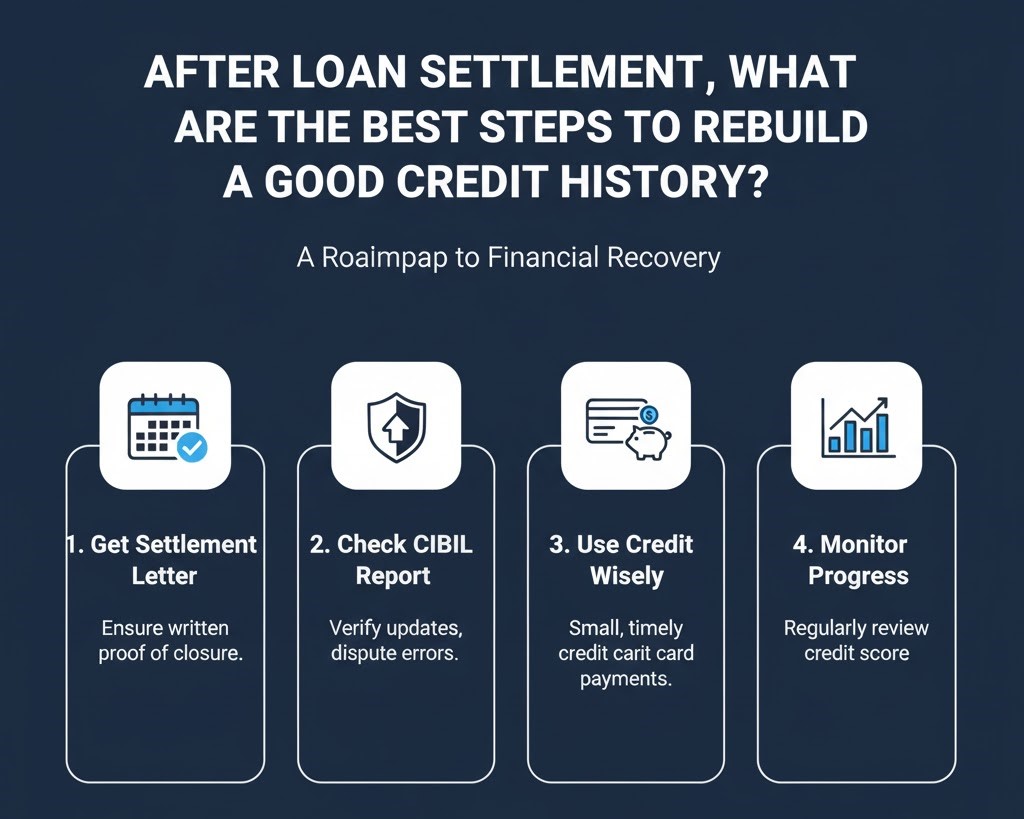
A Loan Settlement is a major win—it frees you from overwhelming debt and unmanageable EMIs. However, it leaves a lasting mark on your credit report: the account is marked as “Settled,” indicating you didn’t repay the full contractual amount. This status significantly drops your Credit Score and remains visible for up to seven years.
The good news is that your financial journey is far from over. By being disciplined and strategic, you can start rebuilding your creditworthiness immediately. Here are the most effective steps to repair your Credit Score and regain access to credit after you Settle Loan.
1. Check and Correct Your Credit Report (The Foundation)
Your first step must be administrative. Ensure the final agreement is correctly reported.
- Obtain the NOC: Immediately after paying the settlement amount, secure the formal No Objection Certificate (NOC) from the lender. This document is your proof of closure.
- Verify the Status: Pull a fresh copy of your credit report (CIBIL, Experian, Equifax). Ensure the settled loan is marked as “Settled” and reflects a ₹0 Outstanding Balance. Never accept the status “Written Off” alone.
- Dispute Errors: If you find any inaccuracies (e.g., incorrect settlement date, wrong amount, or the account still showing as active), file a dispute with the credit bureau immediately. These errors can prolong the damage.
2. Prioritize Perfect Payment History (The Biggest Factor)
Payment history accounts for the largest chunk of your Credit Score. You must now establish an impeccable track record.
- Pay Everything On Time: This is non-negotiable. Ensure all your remaining financial obligations—utility bills, rent, new EMIs, or credit card bills—are paid on or before the due date. Set up autopay for minimum payments to prevent accidental late marks.
- Clear All Existing Dues: If you have any other small outstanding dues, clear them as soon as possible. Any pending payment, no matter how small, sends a negative signal to future lenders.
3. Utilize New Credit Wisely (The Rebuilding Tools)
You need to demonstrate you can handle credit responsibly, despite your past settlement.
- Secure a Secured Credit Card: If traditional lenders deny you an unsecured credit card due to your low score, consider getting a Secured Credit Card against a Fixed Deposit (FD). This allows you to use credit and build a positive payment history, as payments are reported to credit bureaus.
- Maintain Low Credit Utilization (CU): This is critical. Never use more than 30% of your available credit limit on any card. Ideally, keep it below 10-20%. A high CU ratio (maxing out a card) signals financial distress and severely hurts your score.
4. Be Patient and Avoid Desperation
Credit Score recovery is a marathon, not a sprint.
- Avoid Frequent Credit Inquiries: Do not apply for multiple loans or credit cards in a short period. Each “hard inquiry” temporarily lowers your score and signals that you are “credit-hungry” or desperate, which deters lenders.
- Patience is Key: It typically takes 12 to 24 months of consistent, responsible financial behavior to see a significant positive rebound in your Credit Score after a Loan Settlement.
Your Loan Settlement closed a difficult chapter. Now, focus on creating a positive, powerful new history that overshadows the old one.
Ready to put a strategic plan in place to rebuild your credit and secure your financial future? Contact Us today.