
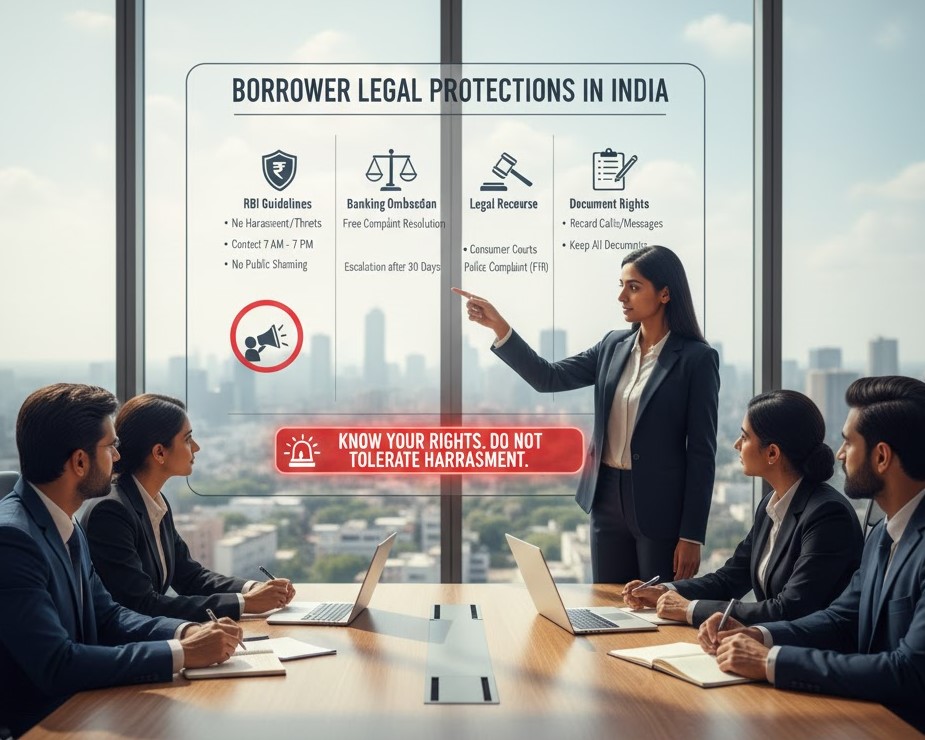
Facing debt is stressful, but no financial institution has the right to strip you of your dignity. In India, borrowers are protected by a robust framework of laws and regulations, primarily laid down by the Reserve Bank of India (RBI), that explicitly prohibit Bank Harassment and unfair recovery methods.
Understanding these protections is the critical first step in fighting back and forcing a professional resolution, such as a Loan Settlement (Settle Loan).
1. The RBI’s Fair Practices Code: Your Foundational Right
The RBI guidelines are the ultimate rulebook governing how banks and NBFCs must treat you during recovery. Any violation of these rules is a direct regulatory offense.
| Your Right (RBI Mandate) | What the Bank Cannot Do |
| Right to Privacy & Dignity | Recovery agents cannot use abusive, threatening, or vulgar language. They cannot publicly humiliate you or discuss your debt with neighbors, relatives, or employers (unless specifically authorized to trace you). |
| Right to Reasonable Contact Hours | Agents can only contact you between 7:00 AM and 7:00 PM. Contacting you outside these hours violates guidelines and constitutes harassment. |
| Right to Identification | Agents must carry and present proper identification cards and an authorization letter from the lender. You have the right to refuse interaction with any unidentified person. |
| Right to Written Notice | Before asset seizure (in secured loans) or initiating stronger recovery actions, the lender must send you a formal written notice (e.g., a 60-day notice under the SARFAESI Act). |
2. Legal Recourse Beyond the RBI
While the RBI handles regulatory complaints, other laws provide direct protection against criminal intimidation and unfair practices:
- Indian Penal Code (IPC) Sections 503 & 506: These sections cover Criminal Intimidation. If a recovery agent threatens you or your family with physical harm, police action can be initiated through a First Information Report (FIR).
- Consumer Protection Act, 2019: You can approach the Consumer Courts if you have faced unfair trade practices, misrepresentation, or deficient services leading to mental harassment by the lender or their agents.
- The Law of Torts (Civil Action): For extreme cases of mental trauma, defamation, or damage to property, you can file a civil suit against the bank or recovery agency to seek compensation.
3. Your Action Plan: Using Your Rights Strategically
Knowing your rights is only useful if you act on them. The process of asserting your rights creates a legal shield that helps facilitate a Loan Settlement.
- Document Everything: Record the name, agency, date, time, and specific abusive language used for every harassing interaction. This creates legal evidence.
- Formal Complaint to the Lender: Send a documented complaint to the bank’s Grievance Redressal Officer (GRO). This is the mandatory first step and forces the bank to acknowledge the issue.
- Escalate to the Regulator: If the harassment continues, file a formal complaint with the RBI Integrated Ombudsman Scheme. This step triggers a regulatory inquiry, which often incentivizes the bank to quickly resolve the account via a Settle Loan to avoid penalties.
Remember, being a defaulter does not strip you of your fundamental human rights. By understanding and asserting these legal protections, you can stop Bank Harassment, take control of the recovery narrative, and force the lender to negotiate a professional and dignified Loan Settlement.
Facing harassment and ready to fight back?
Contact Us today to connect with experts who can help you leverage your legal rights and secure a fair Settle Loan agreement.