
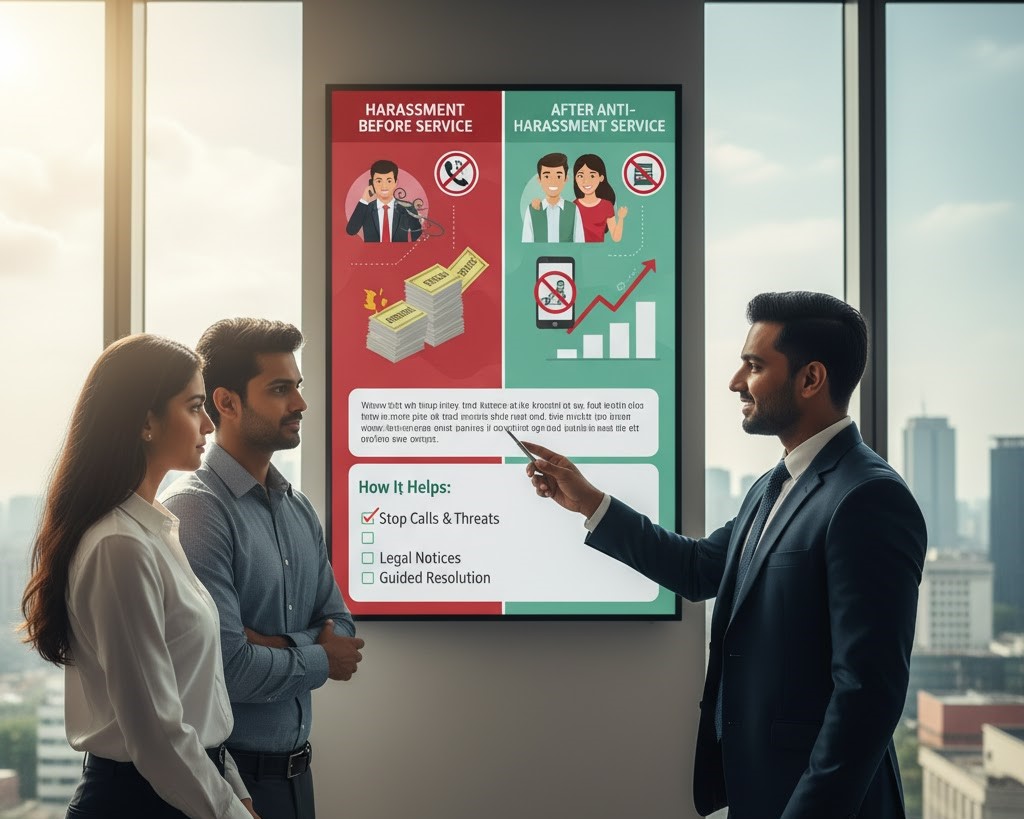
When debt recovery agents resort to illegal, threatening, and abusive tactics—what we call Agent Harassment—it can feel like a direct personal attack. Borrowers, overwhelmed and fearful, often turn to specialized Anti-Harassment Services for help.
The question isn’t whether these services can help, but rather how they strategically leverage the law to ensure the harassment stops and a constructive path, like a Settle Loan agreement, can be pursued.
The answer is Yes, they can be highly effective, because they leverage regulatory compliance (RBI guidelines) and legal processes that the individual borrower often struggles to execute alone.
1. The Goal: Shifting the Dynamic
The effectiveness of an Anti-Harassment Service lies in its ability to immediately shift the interaction from a personal, abusive confrontation to a formal, legally documented process.
| Borrower’s Challenge | Anti-Harassment Service Solution |
| Emotional Overload | Takes over all communication, providing an emotional buffer and maintaining professional distance. |
| Lack of Documentation | Expertly creates and maintains a meticulous Harassment Log (dates, times, specific threats) required for official complaints. |
| Ignoring Rights | Sends Formal Legal Notices (Cease & Desist) to the bank, citing specific RBI violations and demanding only written communication. |
| Bank Inaction | Strategically escalates the complaint (with full documentation) to the bank’s Grievance Redressal Officer (GRO) and then to the RBI Integrated Ombudsman Scheme. |
2. The Power of Regulatory Escalation
Recovery agents continue to harass because they are rarely held accountable by the bank. An Anti-Harassment Service changes this equation by going directly to the regulator:
- Citing RBI Guidelines: The service formally highlights which specific RBI rules were violated (e.g., calling outside 7 AM to 7 PM, threatening arrest, involving third parties). This forces the bank to treat the matter seriously, as persistent violations can lead to heavy fines or an RBI ban on the bank using agents in that area.
- Ombudsman Complaint: A professional service knows exactly how and when to file a formal complaint with the RBI Ombudsman. Once the RBI is involved, the bank is legally obligated to respond and resolve the harassment complaint within a specified timeframe (typically 30 days). This is usually the quickest way to end the abusive calls permanently.
- Legal Notices: Sending a lawyer-drafted legal notice to the bank demanding an end to the harassment, citing the threat of an FIR (First Information Report) under the Indian Penal Code (IPC) for criminal intimidation, often results in the immediate call-off of the abusive agent.
3. Paving the Way for a Settle Loan Agreement
By eliminating the illegal harassment, the service opens the door for a civil, strategic negotiation:
- Forcing Professionalism: Once the agents are off your back, the bank’s recovery department must communicate via formal, documented channels. This removes the intimidation factor from the negotiation.
- Documentation Leverage: The same meticulous records used to stop the harassment (demonstrating the bank’s misconduct) can be used as leverage during a Settle Loan negotiation to achieve a more favorable waiver percentage.
Agent Harassment is illegal, but stopping it requires strategic action, documentation, and proper escalation. An Anti-Harassment Service provides the legal expertise and emotional buffer necessary to execute this plan effectively, quickly securing your right to a dignified debt resolution.