
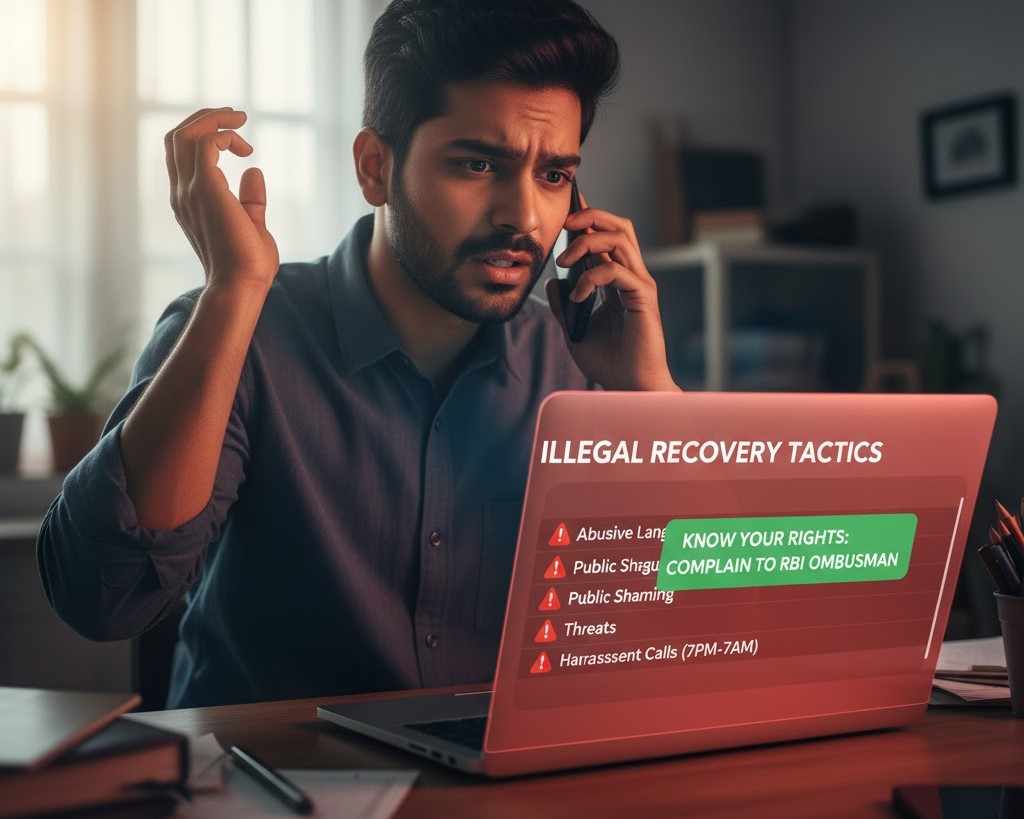
When you fall behind on a loan, the threats and public humiliation from recovery agents can make you feel powerless, leading you to ask: Is this legal? Does the bank have the right to shame me?
The answer is an absolute, unequivocal NO.
The Reserve Bank of India (RBI) and the Supreme Court of India have issued repeated, strict guidelines condemning and prohibiting the use of intimidation, threats, or public shaming by banks and their recovery agents. These actions are not just unethical; they are illegal and a punishable offense.
1. Public Shaming is a Direct Violation of Privacy and Dignity
The RBI’s Fair Practices Code makes it clear that a borrower’s financial difficulty is a private matter. Any attempt by a recovery agent to expose your debt is a violation of your fundamental right to dignity and privacy (Article 21 of the Indian Constitution).
What Constitutes Illegal Public Shaming:
- Involving Third Parties: Telling your neighbors, colleagues, or unrelated family members about your loan default.
- Workplace Visits: Showing up at your place of work to create a scene or demand payment.
- Public Notices: Posting notices, names, or photos (except in specific, legally defined cases of “wilful defaulters” after court approval) outside your home or in public forums.
- Social Media/Digital Harassment: Sharing your name or loan details on WhatsApp, social media, or other digital platforms.
RBI Mandate: Banks and their agents must not resort to intimidation or harassment of any kind, including publicly humiliating the borrower or invading their privacy.
2. Threats and Intimidation: A Criminal Offence
Threatening borrowers is a common fear tactic used by agents, but it carries severe legal consequences for the bank if proven.
- Verbal/Physical Abuse: Any use of abusive language, shouting, or physical threats is illegal.
- False Legal Threats: Agents often threaten arrest, jail time, or immediate property seizure. Recovery agents have no authority to initiate criminal arrest. Real legal action (such as under the SARFAESI Act or civil suit) requires proper documentation and court procedures handled by the bank’s legal department, not a recovery agent.
- Restricted Contact Hours: Agents are strictly forbidden from calling or visiting borrowers before 7:00 AM and after 7:00 PM (though some older guidelines mention 8:00 AM/7:00 PM, the spirit is clear: reasonable hours only).
3. Your Legal Action Plan Against Illegal Harassment
When agents resort to illegal threats or shame, you have the power to stop them immediately.
Step 1: Document Everything
Keep a detailed log of every incident, including the Date, Time, Agent’s Name/Phone Number, and the Exact Threat/Abuse used. This documentation is your strongest weapon.
Step 2: Formal Complaint to the Bank
Immediately file a written complaint (via email or registered post) to the bank’s Grievance Redressal Officer (GRO). Attach your harassment log and demand immediate cessation of the illegal practices.
Step 3: Escalate to the Regulator
If the bank fails to respond within 30 days or the harassment continues, file a complaint with the RBI Integrated Ombudsman Scheme. The RBI views these violations with extreme seriousness and can penalize the bank heavily.
Step 4: Police Complaint (FIR)
If you face physical threats, criminal intimidation, or trespassing, file a First Information Report (FIR) with the police, citing the relevant sections of the Indian Penal Code (e.g., criminal intimidation).
By taking action, you force the bank to abandon illegal harassment and open the door for a professional, legal resolution, such as a negotiated Settle Loan agreement. Your dignity and peace of mind are legally protected.