
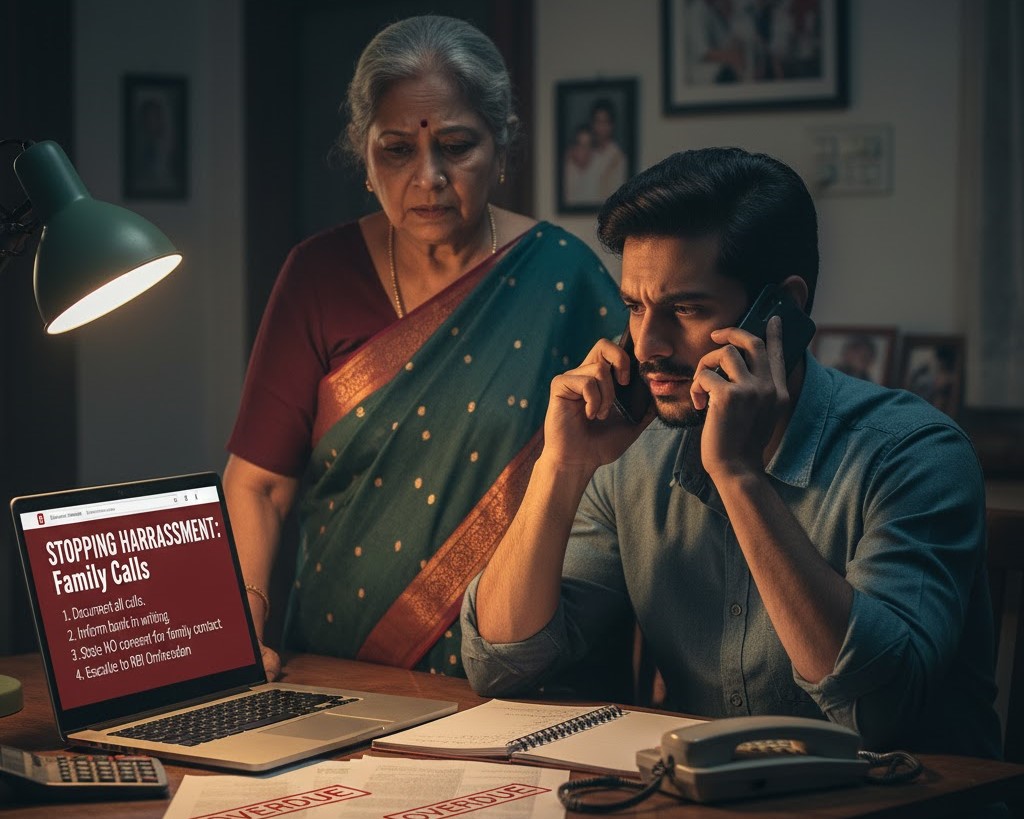
Facing a loan default is stressful enough without the added burden of recovery agents harassing your family members. If calls, messages, or visits are causing distress to your relatives, it’s not only a violation of your privacy but a serious breach of regulations set by the Reserve Bank of India (RBI).
You are not powerless. Here is your actionable, step-by-step guide to legally stopping agent harassment and protecting your loved ones.
Step 1: Document Every Instance of Harassment
The first and most critical step is creating an unassailable record. Without solid proof, your complaint will carry less weight.
- Create a Harassment Log: Record the date, time, phone number (of the agent and the relative called), and the exact nature of the conversation. Note if the agent was abusive, revealed your debt details, or issued threats.
- Save Evidence: Preserve every piece of evidence. This includes call recordings (if permitted by state laws, or after informing the agent you are recording), screenshots of messages (WhatsApp, SMS), and emails received by you or your family.
The Key RBI Rule You Must Know: RBI guidelines strictly prohibit recovery agents from involving or discussing your loan details with any third party, including your family, relatives, or employers, unless they are a legal co-borrower or guarantor. Harassment of any nature is absolutely forbidden.
Step 2: Lodge a Formal Complaint with the Bank/NBFC
The financial institution that gave you the loan is ultimately responsible for the conduct of its appointed recovery agents. You must inform them formally.
- Identify the Grievance Officer: Every bank/NBFC must have a designated Grievance Redressal Officer. Find their name and email address on the lender’s official website.
- Send a Written Complaint: Email the officer with your loan account number, a detailed description of the harassment (using your log from Step 1), and a clear demand: immediately stop the unauthorized contact and harassment of your family members.
- Get a Reference Number: Insist on a complaint reference number and an expected resolution timeline. Keep a copy of the email for your records.
Step 3: Escalate to the RBI Integrated Ombudsman
If the harassment continues, or if the bank/NBFC fails to respond to your complaint within 30 days, escalate the matter directly to the central bank’s authority.
- File Online: You can file a complaint with the Reserve Bank – Integrated Ombudsman Scheme (RB-IOS) through the RBI’s official Complaint Management System (CMS) portal.
- Provide Documentation: Attach your initial complaint to the bank (from Step 2) and all evidence of the continued harassment. The RBI takes these violations very seriously and can direct the bank to stop the misconduct and even levy penalties.
Step 4: Consider Legal Recourse
For severe harassment involving intimidation, threats, or public shaming, you have powerful legal options:
- Police Complaint (FIR): If agents are threatening your or your family’s safety, trespassing, or using abusive language, file a police complaint (First Information Report) under relevant sections of the law for criminal intimidation or breach of peace.
- Legal Notice (Cease and Desist): A lawyer can draft a strong “Cease and Desist” legal notice to the bank/NBFC, formally warning them that any further illegal contact with your family will result in court action for damages and mental distress. This single step often puts an immediate stop to the harassment.
Focus on a Resolution, Not Just Resistance
While stopping harassment is crucial for your well-being, the core issue is the outstanding debt. The most effective way to end all recovery calls permanently—for you and your family—is to work towards a permanent solution.
This is where Settle Loan can help. Our expertise lies in:
- Anti-Harassment Shield: We provide legal support to immediately intervene and stop illegal recovery practices, protecting your family’s peace of mind while we work on your case.
- Professional Negotiation: We act as the intermediary, removing the stressful back-and-forth between you and the lender. Our goal is to negotiate a fair, legally-binding One-Time Settlement (OTS) or a favorable restructuring plan.
- Peace of Mind: Let our experts handle the pressure and the legal complexities. You focus on rebuilding your financial stability.
Don’t Let Harassment Ruin Your Life or Your Family’s Peace.
If recovery agents are crossing the line, you have rights, and you have options.
Ready to stop the calls and find a debt resolution?

