
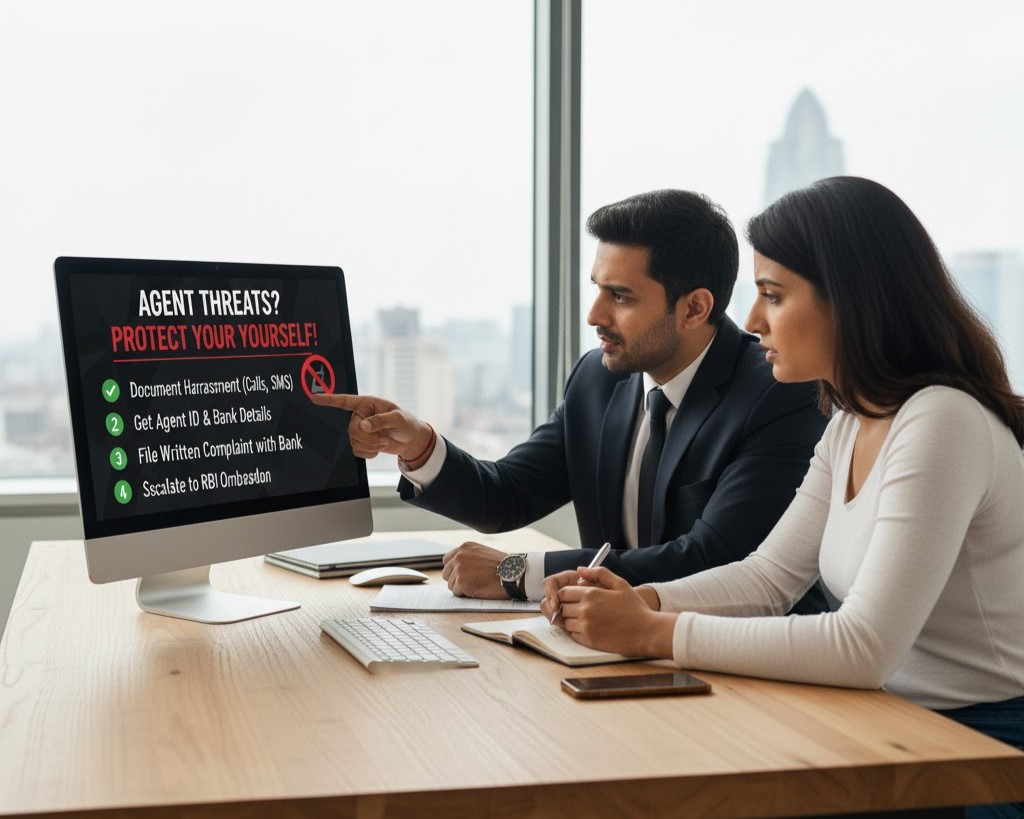
Facing a loan default is stressful enough without the added fear and intimidation tactics used by aggressive recovery agents. It is crucial to know that harassment is illegal and is a direct violation of the Reserve Bank of India (RBI) guidelines.
You are not powerless. You have a legal and strategic action plan to protect your dignity, your privacy, and ultimately, to force the bank to negotiate a resolution like a Settle Loan agreement professionally.
1. Know Your Rights: What Agents Cannot Do
The first step in using an Anti-Harassment Service is to understand the rules the agents are breaking. The RBI’s Fair Practices Code gives you the legal high ground:
- Restricted Contact Hours: Agents can only call or visit you between 7:00 AM and 7:00 PM. Calls outside this window are a direct violation.
- Privacy Violation: Agents cannot disclose your loan details to neighbors, colleagues, relatives, or employers. Public shaming is strictly prohibited.
- No Coercion: They cannot use abusive language, shout, intimidate, threaten legal action (like arrest or jail, which they have no power to do), or threaten physical harm.
- Identification is Mandatory: They must carry and show a valid ID card and a letter of authorization from the bank for your specific case. You have the right to refuse to engage with unverified individuals.
2. The Action Plan: How to Stop the Harassment
Follow this step-by-step process to transform yourself from a victim to a complainant with a strong legal case:
Step 1: Document Everything (Your Evidence)
- Maintain a Harassment Log: For every incident (call, text, visit), immediately record the Date, Time, Caller ID/Phone Number, Agent’s Name (if given), and the Exact Content of the abuse or threat.
- Collect Proof: Save all threatening messages and, if permissible by law in your state, inform the agent you are recording the call.
Step 2: Formal Complaint to the Lender
- Contact the Grievance Redressal Officer (GRO): Every bank/NBFC must publish the contact details of their GRO.
- Send a Formal Email: Write a detailed email (or registered letter) to the GRO, attaching your harassment log and demanding immediate action. Clearly state that continued unauthorized contact will lead to escalation.
- Demand a Written Response: The lender is obligated to respond to your complaint within a specified timeframe (usually 30 days).
Step 3: Escalate to the Regulator (RBI Ombudsman)
- If Ignored: If the bank fails to respond within 30 days or the harassment continues after their response, immediately file a complaint with the RBI Integrated Ombudsman Scheme (via the CMS portal).
- Attach Proof: Submit your original complaint to the bank, the bank’s non-response (or unsatisfactory response), and your harassment log. The RBI takes these violations very seriously and can impose heavy penalties or even ban the bank from using agents in a specific area.
Step 4: Police Complaint (For Extreme Cases)
- When to Go to the Police: If the agents resort to criminal intimidation, physical threats, stalking, or trespassing (illegal entry into your home), immediately file a First Information Report (FIR) at your local police station. Use sections of the Indian Penal Code (IPC) like criminal intimidation (Section 503/506).
A well-documented complaint, backed by the law and escalated to the RBI, forces the bank to shift its focus from aggression to genuine resolution, opening the door for a professional negotiation like a Settle Loan or restructuring.
A quick and easy way to handle this is to use a professional service, such as an Anti-Harassment Service, which can manage all documentation and escalation on your behalf.