
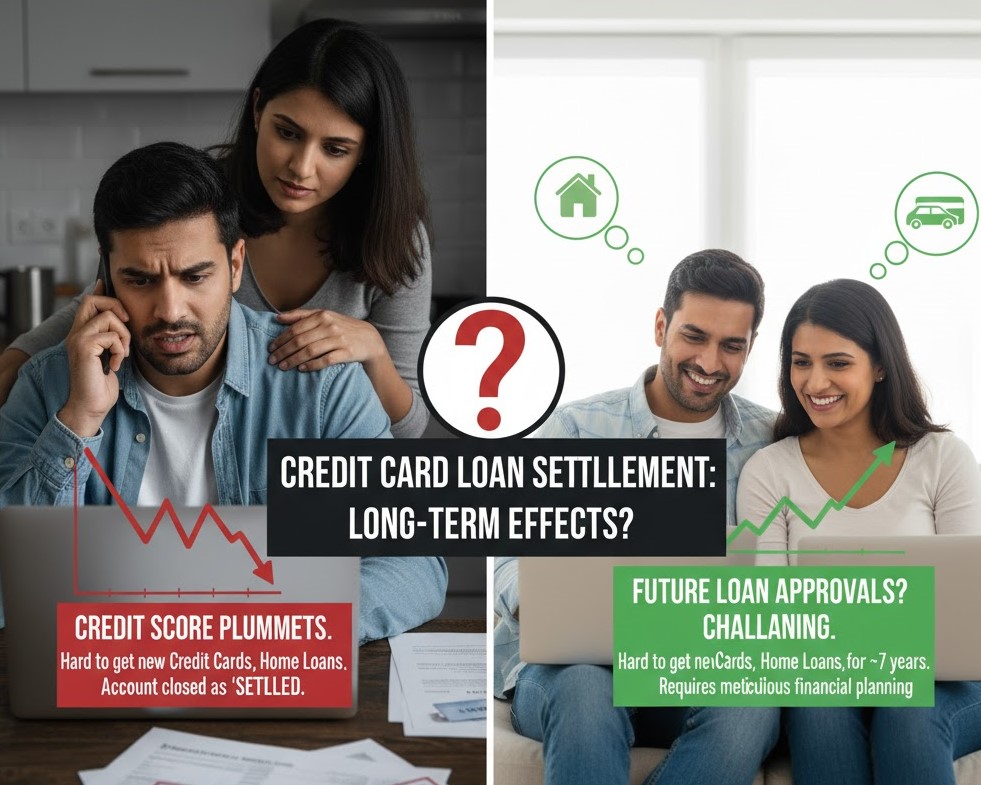
Facing overwhelming credit card debt can be incredibly stressful. When financial difficulty hits, a Settle Loan agreement—where you pay a reduced, lump-sum amount to close your debt—can feel like an immediate lifeline. While a Settle Loan offers short-term relief, it casts a long shadow over your credit profile and future borrowing capacity.
Understanding the long-term effects of a Credit Card Loan Settlement on your ability to secure future loans is crucial before you decide to Settle Loan.
The Immediate and Lasting Impact on Your Credit Score
When you opt to Settle Loan for less than the full amount owed, your lender reports the account status to credit bureaus (like CIBIL in India) as “Settled” instead of “Closed” or “Paid in Full.”
- Significant Credit Score Drop: The “Settled” status immediately lowers your Credit Score. Lenders view this as a negative credit event, indicating that you were unable to meet your full repayment obligation. A lower score signifies higher risk to potential new lenders.
- Long-Term Visibility: The negative “Settled” status remains on your credit report for up to seven years. Even if your Credit Score slowly improves over time, the presence of the settlement is a visible red flag for any financial institution reviewing your credit history.
The Effect on Future Loan Approvals
For the next several years, the “Settled” mark on your credit report will be the single biggest obstacle to securing new credit.
- Rejection of Loan Applications: Most banks and non-banking financial companies (NBFCs) have strict lending policies. A “Settled” status is often a criterion for automatic rejection for unsecured loans like Personal Loans or new Credit Cards.
- Higher Interest Rates: If a lender decides to approve your application despite the settlement, they will view you as a high-risk borrower. This will almost certainly result in:
- Higher Interest Rates: To compensate for the perceived risk.
- Lower Loan/Credit Limits: You’ll be offered less credit than you might otherwise qualify for.
- Stricter Terms: The lender might require a guarantor or collateral even for typically unsecured loans.
- Difficulty with Major Secured Loans: A settlement can even complicate approvals for secured loans like Home Loans or Car Loans, though the impact may be less severe than on unsecured loans. Lenders will still scrutinize your inability to pay a previous debt in full.
💡 Rebuilding Your Financial Future After You Settle Loan
While the impact is significant, it is possible to rebuild your credit health over time.
- Pay Remaining Balances (If Possible): The best way to improve your status is to contact your lender and pay the remaining, waived-off amount. Once paid, the lender can change the status from “Settled” to “Closed” with the credit bureau, which removes the negative red flag and drastically improves your Credit Score.
- Maintain Pristine Financial Behavior: For any existing or new credit you obtain, ensure 100% on-time payments. This includes EMIs, utility bills, and other financial obligations.
- Keep Credit Utilization Low: Use only a small portion (ideally less than 30%) of the credit limits available to you.
- Limit New Credit Applications: Avoid applying for multiple new loans or credit cards in a short period, as this also negatively impacts your score.
Ready to Explore Your Options?
A Credit Card Loan Settlement should always be viewed as a last resort. If you are struggling with overwhelming debt, it is vital to fully understand all your options and the potential long-term consequences.
For personalized guidance on debt resolution, understanding the best path for your unique situation, and learning how to effectively Settle Loan while minimizing future impact, our expert team is here to help.
Contact Us today for a confidential, no-obligation consultation. We will help you navigate the complexities of debt and work towards financial stability.