
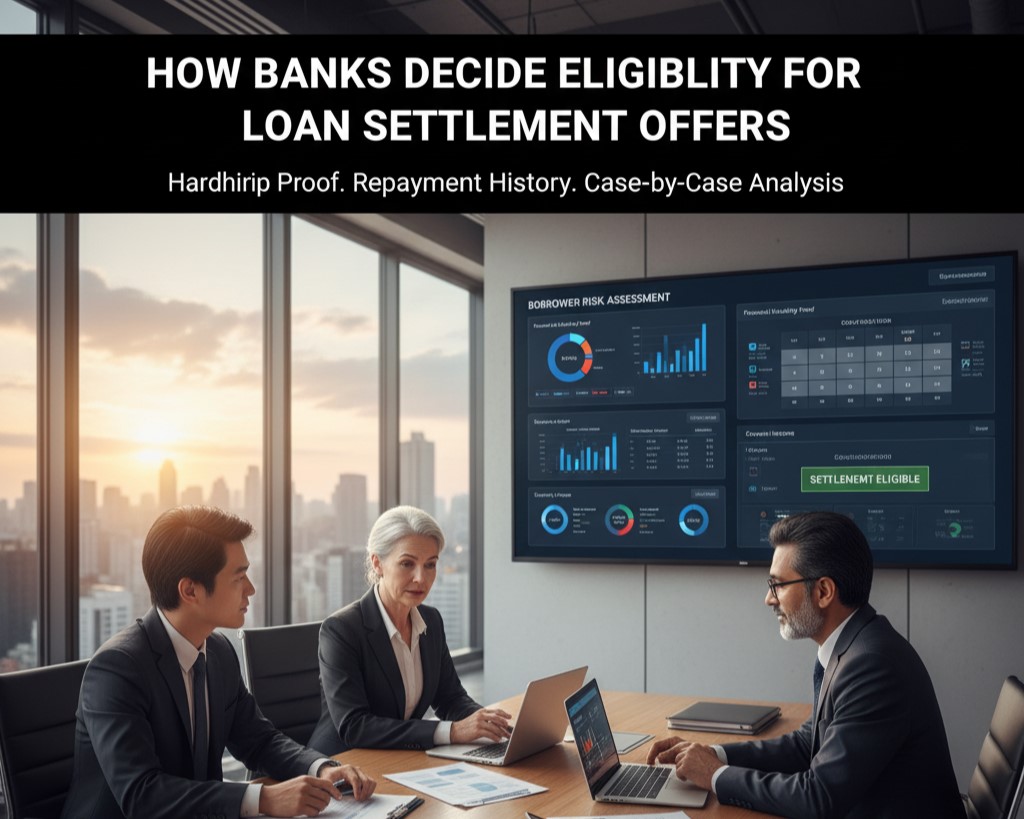
If you’re facing a financial crisis and can no longer afford your loan EMIs, you may be considering a loan settlement. But before you can get a settlement offer, you need to understand how banks think.
A bank’s decision to offer a settlement is not a favor; it is a business decision. The bank’s goal is to minimize its losses. A settlement is considered when a bank believes it is the best way to recover at least a portion of the debt, rather than risking a total loss or a long, expensive legal battle.
At Settle Loan, we empower you by demystifying this process. Here are the key factors banks consider when deciding your eligibility for a loan settlement.
The Most Important Factor: Proving Genuine Financial Hardship
This is the single most crucial factor. A bank will not consider a settlement unless you can provide verifiable proof of genuine, unavoidable financial hardship. They need to see that your inability to pay is not a choice, but a circumstance beyond your control.
Examples of genuine hardship that banks recognize include:
- Job Loss or Business Failure: A letter of termination, proof of business closure, or a significant drop in income.
- Medical Emergency: Hospitalization bills, medical reports, or a long-term illness that has drained your savings.
- Disability or Permanent Injury: A medical certificate or documentation of a disability that prevents you from working.
- Natural Disaster: Proof that a flood, fire, or other natural disaster has destroyed your property or business.
To prove your hardship, you must be prepared to submit documents that confirm your situation. The more comprehensive your documentation, the stronger your case.
The Bank’s Internal Criteria
Beyond your hardship, the bank has its own internal criteria that determine whether you are a suitable candidate for a settlement.
- Default Status: A bank will rarely, if ever, consider a settlement on a current loan account. A loan must be in default for a significant period, typically 90 days or more, before it is classified as an NPA (Non-Performing Asset). It is at this stage that the bank’s recovery team may begin to consider a settlement as a viable option.
- Your Repayment History: While you are in default now, the bank will look at your past behavior. If you have a history of timely payments before the default, it shows that your current situation is a recent and genuine hardship, which can work in your favor.
- Loan Type: Unsecured loans like personal loans and credit card debt are the most common types of loans that are settled. For a secured loan like a home or car loan, the bank has the option to seize the asset, making a settlement less likely.
- Your Proposed Lump Sum: The bank will assess the amount you are willing to offer as a lump sum. They are looking for a reasonable amount that helps them recover a significant portion of the principal and avoid the cost of legal action. Your offer is the starting point of the negotiation.
Your Role: The Documents You Need
To prepare for a settlement negotiation, you should have all your documents in order. This will not only strengthen your case but also show the bank that you are serious about resolving the debt.
- Proof of Financial Hardship: Termination letter, medical bills, or other relevant documents.
- Proof of Income/Financial Statements: Your latest bank statements, IT returns, or business financial statements.
- Loan Documents: The original loan agreement and your latest account statements from the bank.
- ID Proof: Your Aadhar Card and PAN Card.
Let Settle Loan Guide You to a Successful Settlement
Navigating a loan settlement is a major financial decision. It requires a clear strategy, strong negotiation skills, and a deep understanding of the bank’s internal processes. Simply calling your bank and asking for a settlement is rarely effective.
At Settle Loan, we are experts in this field. We provide:
- Personalized Assessment: We help you assess your financial situation and prepare a compelling case.
- Expert Negotiation: We handle all communication with your lender to secure a fair and reasonable settlement offer.
- Legal Compliance: We ensure that you receive all the necessary legal documents—the Settlement Letter and the No Dues Certificate—so you are fully protected.
Don’t let unmanageable debt define your future. Contact us today for a free consultation and let us help you find a strategic, legally sound path to a debt-free life.