
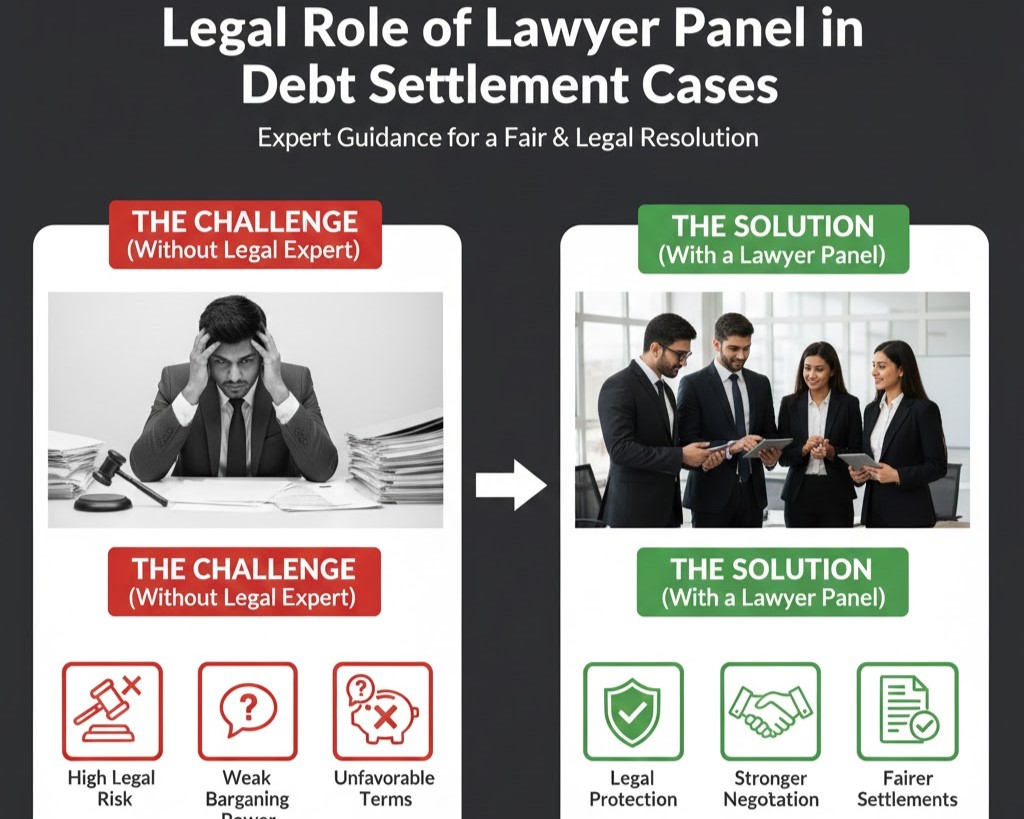
While securing a reduced settlement value is the primary financial goal of Debt Settlement, ensuring the process is legally sound and permanent is equally vital. This is where the specialized legal role of a lawyer panel becomes indispensable.
A dedicated lawyer panel provides more than just negotiation support; they act as your legal shield, enforcing borrower protection rights, mitigating risks, and guaranteeing a clean, final debt closure.
1. The Legal Firewall: Enforcing Borrower Protection
The lawyer’s role begins by establishing a legal boundary between you and the lender’s recovery team.
-
Formal Representation: The moment the lawyer panel sends a formal notice of representation to the bank, all communication must be routed through them. This immediately stops direct recovery calls, threats, and illegal Bank Harassment.
-
Compliance Enforcement: Lawyers monitor the bank’s adherence to the RBI Fair Practices Code and debt recovery guidelines. Any procedural lapse or aggressive behavior is documented and used as leverage in the settlement negotiation, pushing the bank toward a quick, professional resolution.
2. Rigorous Documentation and Vetting
The greatest risk in Debt Settlement lies in accepting vague verbal promises or flawed paperwork. The lawyer panel eliminates this risk.
-
Drafting the Offer: Lawyers draft the initial Loan Settlement Letter (OTS offer) with precise legal language, ensuring the offer is correctly framed to maximize the waiver while clearly defining the terms of the full and final settlement.
-
Vetting the Final Agreement: Before you remit the final payment, the lawyer rigorously vets the bank’s formal Loan Settlement Letter. They check that the letter explicitly states the bank waives all accrued interest, penalties, and future liability, ensuring no legal loopholes remain.
-
Securing the NDC: They actively pursue the bank to ensure the No Dues Certificate (NDC) is issued promptly after payment. This NDC is your ultimate legal proof of debt closure and is stored securely for future reference.
3. Litigation Risk Mitigation
A key part of the lawyer panel‘s legal role is demonstrating the cost and uncertainty the bank faces by not settling.
-
Cost Analysis: Lawyers present the bank with a clear analysis showing that the administrative and legal costs (court fees, lawyer fees, time delays) associated with pursuing litigation (e.g., in DRT, SARFAESI) often outweigh the potential recovery. This makes the negotiated settlement a better business decision for the bank.
-
Navigating Legal Notices: If the bank has already initiated legal proceedings (e.g., Section 13(2) notice under SARFAESI or a civil suit), the lawyer panel handles all legal correspondence and ensures the settlement agreement includes a clause for the immediate withdrawal of all such notices and cases upon successful payment.
4. Post-Settlement Financial Recovery Support
The legal obligations don’t end with the payment; they extend to your credit report.
-
CIBIL Dispute Handling: If the bank incorrectly reports the loan status as “Written-Off” instead of the agreed-upon “Settled,” the lawyer panel steps in. They utilize the NDC and the Loan Settlement Letter to formally raise a legal dispute with the credit bureau, enforcing accurate credit reporting and protecting your financial recovery.
By engaging a professional lawyer panel, you gain a powerful legal advocate who guarantees your Loan Settlement is not just financially advantageous but is 100% legally watertight, securing your path to financial stability.
Ready to secure legal protection for your settlement?
Contact Us today for a consultation with our experienced lawyer panel to ensure clean, safe debt closure.