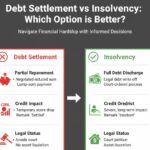
Facing overwhelming debt and struggling to maintain your EMI payments can feel hopeless. However, for defaulted loans, debt settlement is a strategic and legal option that provides significant EMI relief and a defined path to debt closure.
Debt settlement is a negotiation process where the bank agrees to accept a one-time lump sum payment that is less than the total outstanding amount, thereby waiving the remainder of the debt.
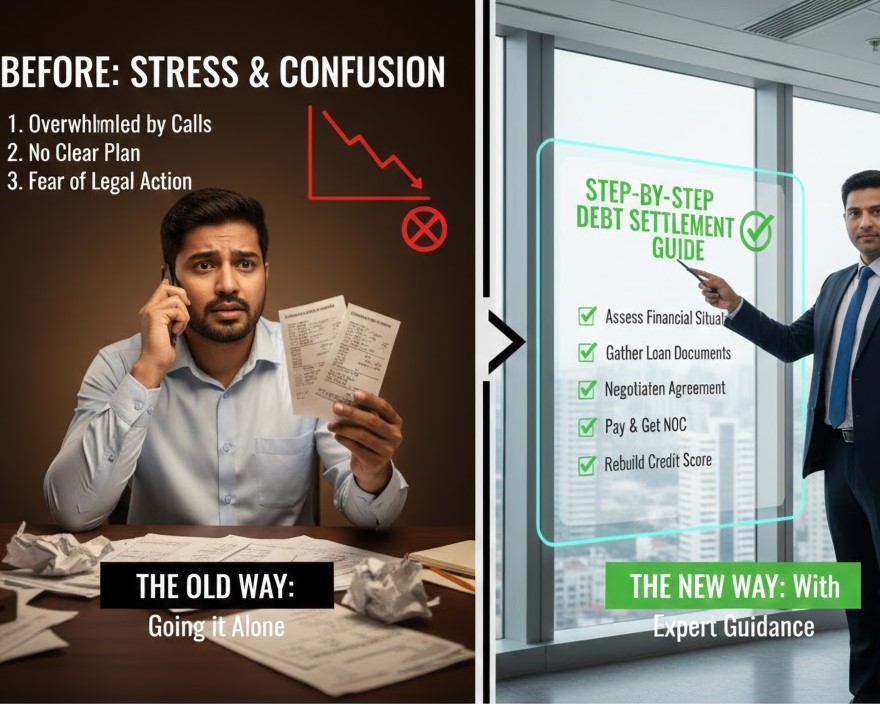
Here is a comprehensive, step-by-step guide tailored for Indian borrowers to navigate the repayment process and achieve a successful settlement.
Step 1: Acknowledge Default and Assess Financial Status (The Foundation)
You must act decisively the moment you realize your current repayment process is permanently unsustainable.
-
Stop Token Payments: If you cannot afford the full EMI, avoid making small, partial payments. These payments often reset the loan’s status without solving the core problem.
-
Determine Your Capacity: Calculate the exact lump sum amount you can realistically afford to pay right now (your settlement offer). This is your absolute maximum.
-
Gather Documentation: Secure all necessary proof of genuine financial hardship (e.g., job loss letter, medical records, documented salary cut). Banks require this evidence to justify the debt waiver.
Step 2: Understanding the Negotiation Window (The Timing)
Banks only seriously consider debt settlement when the loan is classified as a Non-Performing Asset (NPA).
-
NPA Status: This occurs when the loan is 90+ days overdue. This classification triggers the bank’s internal write-off mechanism, making them willing to negotiate recovery to clean their books.
-
Initiate Contact Professionally: Contact the bank’s Legal/Collections Head or the Grievance Redressal Officer (GRO). Avoid negotiating exclusively with recovery agents, who lack the authority to approve a waiver.
Step 3: Submitting the Formal Settlement Offer (The Strategy)
Your offer must be professional, factual, and backed by your capacity to pay.
-
Draft the Letter: Prepare a formal Loan Settlement Letter (One-Time Settlement or OTS request). Clearly state your loan account number, explain the verified financial hardship, and propose a specific lump sum settlement value.
-
Request the Waiver: Explicitly request the waiver of all accumulated penalties, late fees, and remaining interest.
-
Demand Written Agreement: State clearly that your offer is conditional upon receiving a formal Loan Settlement Letter from the bank on their letterhead before you make the final payment.
Step 4: Negotiate, Finalize, and Pay (The Closure)
Expect the bank to counter-offer. Maintain a firm, professional stance.
-
The Counter: The bank will counter-offer, typically higher than your initial proposal. Use your lump-sum capacity and hardship documents as leverage to push the figure back down.
-
Secure the Settlement Letter: Once a final amount is agreed upon, do not pay until you have the official, signed Loan Settlement Letter. Verify that the letter clearly states the payment is accepted as “full and final satisfaction” of the debt.
-
Final Payment: Pay the exact agreed-upon lump sum by the deadline specified in the letter.
Step 5: Post-Settlement Due Diligence (The Debt Closure)
Your debt is not legally closed until you have the final documents.
-
Collect the NDC: Immediately follow up to obtain the No Dues Certificate (NDC). This legal document is your irrefutable proof of debt closure and permanent EMI relief. Keep this document forever.
-
Monitor Credit Report: Within 60 days, check your CIBIL report. Ensure the status is correctly marked “Settled” (not “Written-Off”). Dispute any errors using your NDC.
-
New Financial Plan: The debt is closed. Focus your energy on building an emergency fund and consistently maintaining a positive repayment process on any future or existing debts.
By following this disciplined, step-by-step debt settlement guide, Indian borrowers can regain control, secure significant EMI relief, and successfully achieve debt closure.
Need help negotiating your settlement?
Contact Us today for expert guidance on structuring your offer and securing your debt settlement.