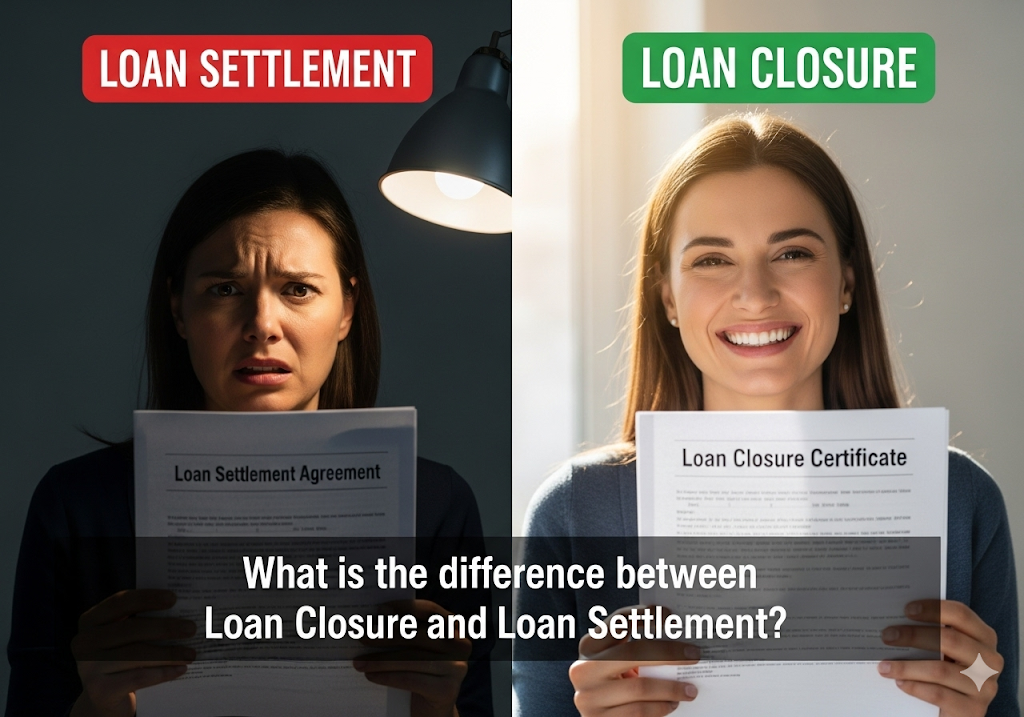
When you are facing debt, you might hear two terms that sound similar but are worlds apart: Loan Closure and Loan Settlement. Understanding the difference between these two is crucial, as the choice can have a monumental and lasting impact on your financial future and credit health.
At Settle Loan, we believe in providing clear, honest information so you can make the best decision for your situation. Here is a comprehensive guide to help you understand the difference.
Loan Closure: The Ideal Path
A loan closure is the ideal and intended outcome for any loan. It happens when you have successfully repaid the entire outstanding amount as per the terms of your original loan agreement. This can occur through regular EMI payments over the full tenure or through a one-time pre-closure.
What Happens When You Close a Loan:
- Credit Report Status: Your credit report is marked with a positive status like “Closed,” “Paid,” or “Account Closed.” This reflects your responsible financial behavior.
- Credit Score Impact: Your credit score is positively affected. A successfully closed loan signals to credit bureaus and future lenders that you are a reliable borrower, making it easier to get new loans or credit cards at favorable interest rates.
- Legal Documentation: Upon full repayment, the bank is legally obligated to issue a No Dues Certificate (NDC). This document is your official proof that you have cleared the debt in full.
Loan Settlement: The Strategic Last Resort
A loan settlement is a last-resort option for a borrower who is in severe financial distress and cannot afford to repay the full loan amount. In this case, you negotiate with the bank to pay a reduced, lump-sum amount to close the loan account.
The bank agrees to a settlement because it’s a better alternative than a total default, where they might recover nothing at all.
What Happens When You Settle a Loan:
- Credit Report Status: This is the most significant downside. Your credit report is marked with a negative status: “Settled.” This is a red flag for future lenders.
- Credit Score Impact: Your credit score is severely damaged. The “Settled” status tells future lenders that you were unable to meet your original loan obligations. This status remains on your credit report for up to 7 years and will make it very difficult to secure any new credit in the future.
- Legal Documentation: Upon payment, the bank will issue a Settlement Letter and, after the payment is processed, a No Dues Certificate (NDC). However, this NDC will be for the settled amount, and the credit report will still reflect the negative “Settled” status.
At a Glance: Key Differences
Why a Settlement Can Be the Right Choice
Given the severe consequences, why would anyone choose a loan settlement? The answer is simple: a settlement is a better alternative to defaulting completely.
- Avoids Worse Consequences: A total default, marked as “written-off,” is even more damaging than a settlement. It can lead to legal action, a lower credit score, and even asset seizure. A settlement stops this process.
- Ends Harassment: It provides a definitive legal end to the constant, humiliating harassment from banks and collection agents.
- A Clear Path Forward: It allows you to resolve an unmanageable financial situation and begin the long, but possible, process of rebuilding your credit history.
Navigating the Process with an Expert
The decision to settle a loan is a major one, and the negotiation process can be complex. Without a proper legal agreement, you risk paying a settlement amount and still not getting a clear resolution.
At Settle Loan, we are your expert partners in this journey. We provide:
- Expert Negotiation: We handle all communication with the bank to get you the best possible settlement offer.
- Legal Protection: We ensure all legal documents, including the crucial Settlement Letter, are in place to protect you from future claims.
- A Roadmap to Recovery: We don’t just settle your loan; we provide a clear plan for your financial recovery, including tips on how to rebuild your credit score.
Don’t let unmanageable debt define your future. Contact us today for a free consultation and let us help you find a strategic, legally sound path to a debt-free life.