
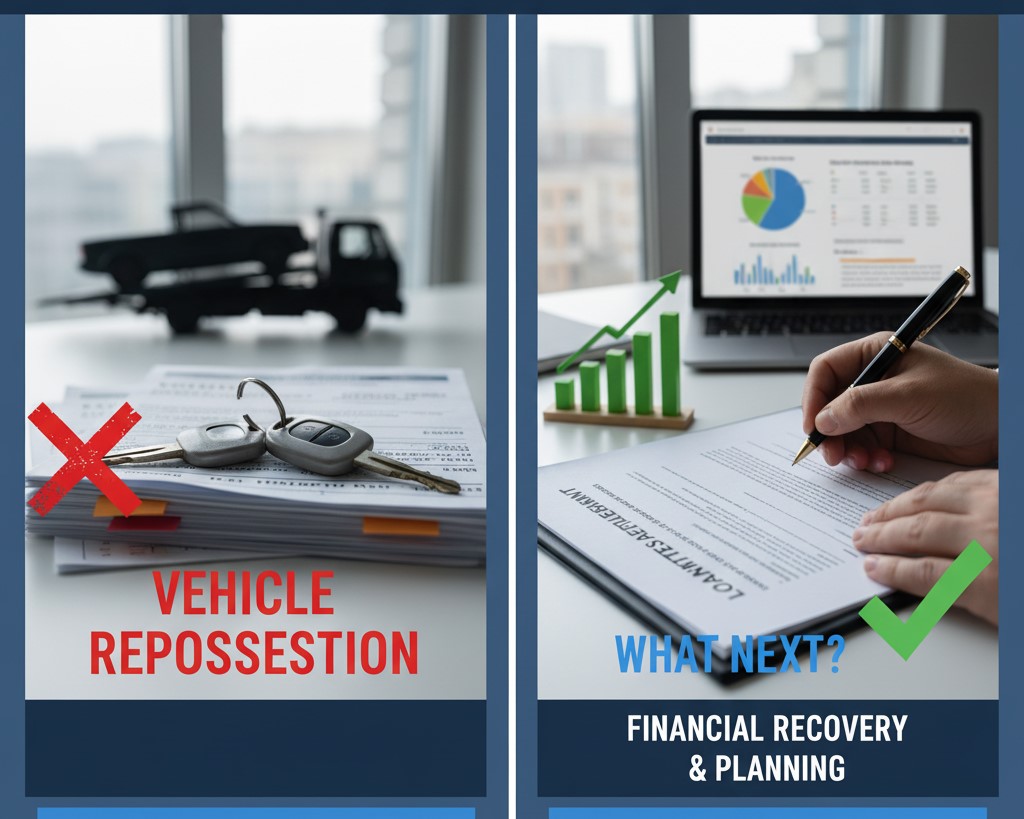
Losing your vehicle after an EMI default and subsequent repossession is a difficult and stressful experience. You’ve not only lost your asset, but you’re often left facing a demand for the remaining loan amount—known as the ‘deficit’ or ‘shortfall’—after the bank sells the repossessed car.
You might feel defeated, but the battle for your financial future is not over.
At Settle Loan, we want you to know that the period following repossession is the most crucial time to take control. This is the moment to strategically pursue a car loan settlement to finally put the debt behind you.
Understanding Your Post-Repossession Debt
When a bank repossesses your vehicle, the process is as follows:
- Repossession and Sale: The bank sells the car, typically through an auction.
- Calculation of Shortfall: The sale price is deducted from your total outstanding loan amount (which includes principal, interest, and all of the bank’s towing/repossession fees).
- The Deficit: If the sale price does not cover the entire outstanding amount, the remaining balance is the ‘shortfall’ or ‘deficit’ that the bank demands from you.
This deficit is often surprisingly large because the bank sells the vehicle at a wholesale price, and they add exorbitant recovery and penal charges to your account. You are still on the hook for this remaining balance.
Why Car Loan Settlement is Crucial After Repossession
The bank’s demand for the deficit is a debt just like the original loan. Ignoring it will lead to continuous collection efforts, negative impacts on your credit score, and potential legal action.
A strategic car loan settlement is the fastest and most efficient way to achieve closure:
1. Eliminate the ‘Deficit’ Debt
The deficit is precisely what we target for negotiation. Our goal is to negotiate a significant reduction of this final amount. Instead of paying the full, inflated shortfall, you can pay a fraction of it to achieve a car loan settlement.
2. Stop the Final Collection Harassment
Collection calls often intensify after repossession as the bank tries to recover the deficit quickly. By engaging Settle Loan, all communication regarding the final payment and collection attempts is routed through our experts, shielding you from further harassment.
3. Clear Your Credit Report
An unresolved deficit will keep the loan account marked as ‘Default’ indefinitely. A successful settlement closes the account with a ‘Settled’ status. While this still indicates a compromise, it is a definitive end to the debt, allowing you to begin the essential process of rebuilding your credit. An open default prevents you from taking any new credit.
4. Achieve Financial Certainty
A settlement provides certainty. You move from an unknown, escalating debt to a single, fixed, affordable payment to achieve a final resolution.
The Settle Loan Advantage: Expert Negotiation on Your Behalf
The time immediately following repossession is when the bank is most receptive to negotiation, as their primary goal is to close the account and recover some funds. However, they will never offer you the best deal without professional pressure.
Settle Loan specializes in leveraging the circumstances of the repossession and the final sale to negotiate the lowest possible settlement amount. We scrutinize the bank’s sale process and fee structures to challenge the inflated deficit figure, often resulting in massive savings for you.
Ready to Close This Chapter?
Don’t let the repossession be the end of your financial hope. Take the powerful step of resolving the remaining debt. This is your moment to gain control, achieve a fair car loan settlement, and move on with your life.
Your journey to being debt free from this loan starts now.