
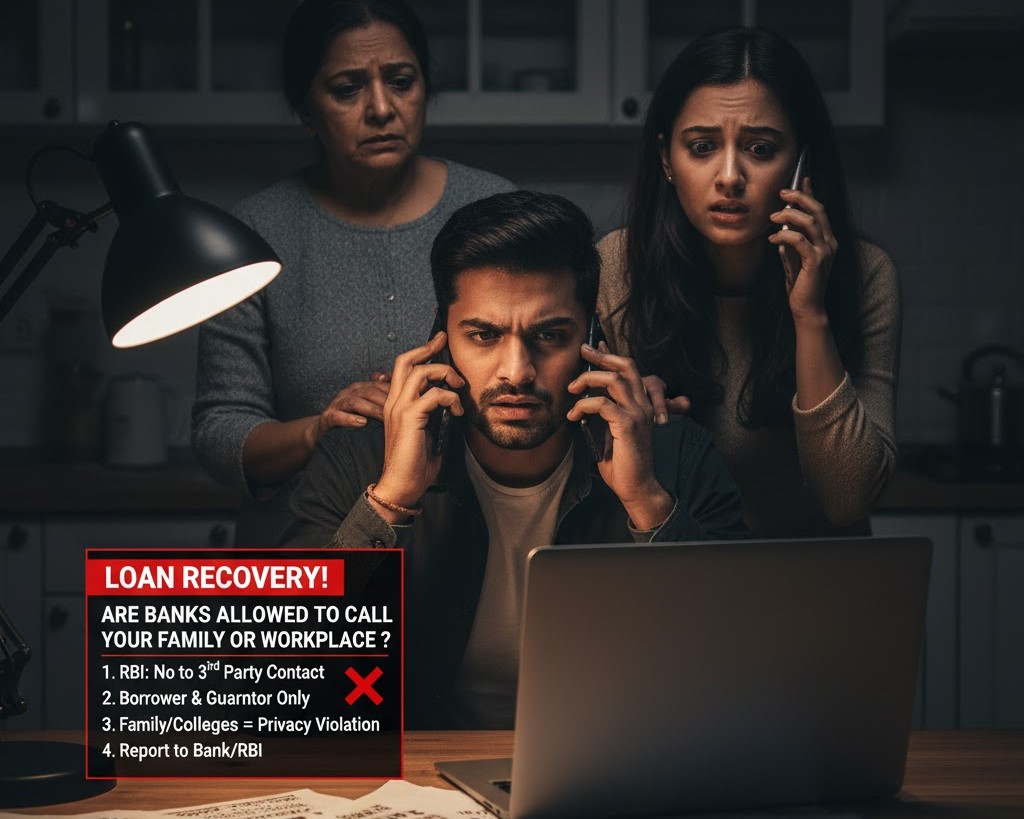
The stress of an unpaid loan should never turn into public humiliation. If a bank or its recovery agents start calling your family members, friends, or workplace to disclose your debt details, they are committing a serious violation of your privacy and the RBI’s Fair Practices Code.
This type of aggressive behavior is known as Bank Harassment and is strictly prohibited in India. Taking immediate legal steps is essential to stop the abuse and force the bank to negotiate a dignified Loan Settlement (Settle Loan).
Know Your Fundamental Right: The Privacy Firewall
The RBI guidelines state that recovery agents cannot contact your friends, relatives, employers, or colleagues without your explicit consent or unless they are co-borrowers or guarantors on the loan.
- The Violation: Revealing your personal debt status to unauthorized third parties (like your boss or neighbors) is a direct breach of confidentiality and is considered a form of harassment and intimidation.
- The Goal: The agent uses this tactic to pressure you into paying by creating public shame and fear. You must neutralize this pressure with legal authority.
Step 1: Document the Violation Rigorously
Build an undeniable case against the bank. This evidence is crucial for all official complaints.
- Log Details: Record the Date, Time, and Name of the agent who made the call to the third party.
- Witness Statement: Get a written statement (email or recorded message) from the family member or employer confirming the call, the agent’s name, the bank/agency they claimed to represent, and exactly what debt information was disclosed.
- Collect Phone Numbers: Note the phone number the agent used to call the third party.
Step 2: Formal Complaint to the Lender (The First Warning)
You must formally put the bank on notice that its agents are breaking the law.
- Target the GRO: Send a detailed written complaint (email or registered post) to the bank’s Grievance Redressal Officer (GRO). You can find this officer’s contact details on the bank’s website.
- Cite the Violation: State clearly that the agent violated RBI guidelines by disclosing private loan information to unauthorized third parties (naming the person and relationship).
- Demand Action: Demand an immediate end to all contact with your family/workplace and action against the offending agent/agency within 30 days.
Step 3: Escalate to the RBI Ombudsman (The Power Move)
If the bank fails to respond within 30 days or the harassment continues, this is your most effective next step.
- File an RBI Complaint: Lodge a complaint with the RBI Integrated Ombudsman Scheme (RB-IOS) via their online CMS portal.
- Attach Evidence: Submit your initial complaint to the bank, the bank’s inadequate response, and the witness statement you collected in Step 1.
- The Result: The RBI treats these confidentiality breaches as severe regulatory misconduct. The threat of penalties often compels the bank to immediately call off the agents and seek a quick, professional resolution, making the path to a Settle Loan much smoother.
By taking these steps, you immediately assert your legal rights and shift the power dynamic. You move the conversation away from emotional Bank Harassment and towards a structured, professional debt resolution.