
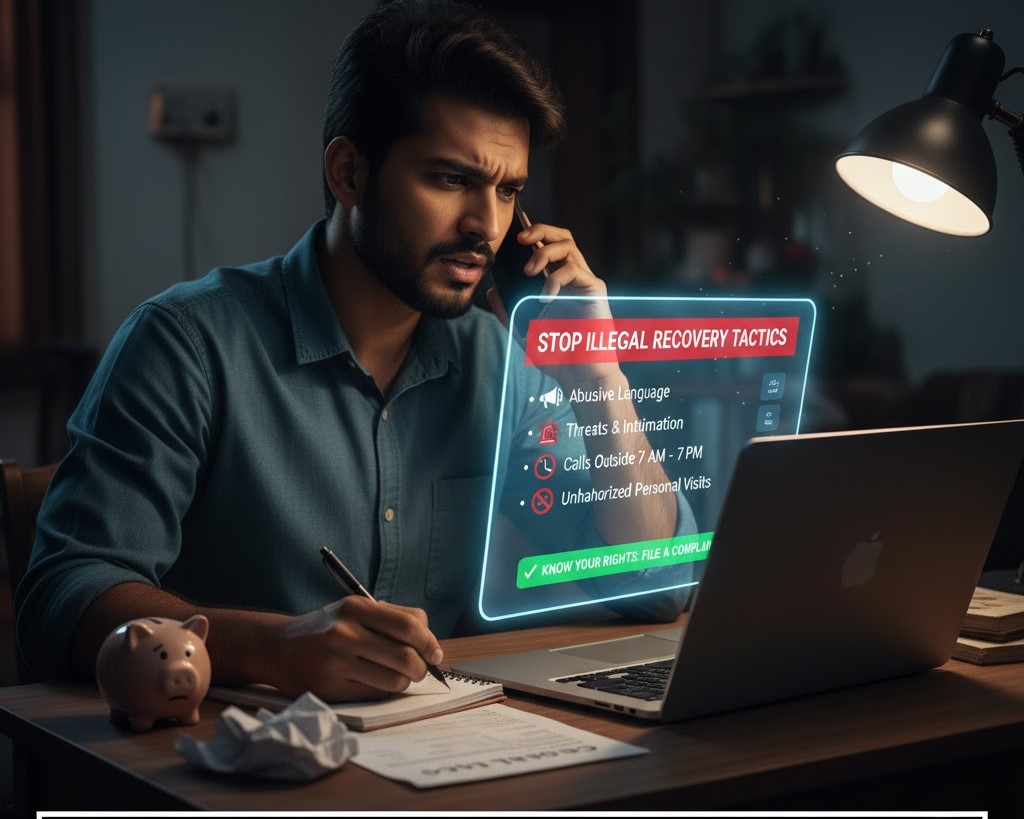
When you are unable to pay your EMIs, the bank has a right to recover the money, but NOT to threaten your safety, invade your privacy, or publicly humiliate you. If a bank’s recovery team uses aggressive tactics, threats, or unauthorized personal visits in India, they are violating the law and the strict guidelines set by the Reserve Bank of India (RBI).
Taking immediate, documented legal action is the only way to stop this Bank Harassment and shift the discussion from intimidation to a professional Loan Settlement (Settle Loan).
Know Your Rights: What the RBI Prohibits
Your rights as a borrower are protected by the RBI’s Fair Practices Code and various Indian laws. Any agent or bank violating these rules is liable for severe action.
| The Illegal Action | Your RBI Protection | What to Do Immediately |
| Threats & Abuse | Agents must treat you with dignity; no abusive language, intimidation, or violence. | Record the conversation (if permissible) and write down the exact threatening words used. |
| Illegal Visit Timings | Contact (calls or visits) is allowed only between 7:00 AM and 7:00 PM. | Document the date and time of any visit outside this window. Refuse to meet them. |
| Unauthorized Entry | Agents cannot enter your home without your permission or use force/coercion to gain access. | Refuse entry. Call the police immediately if they attempt forceful entry or trespassing. |
| Lack of ID/Authorization | Agents must carry and present their ID and an authorization letter from the bank. | Demand to see their ID and letter. Refuse to talk to anyone who cannot provide them. |
Step 1: Document the Harassment (Your Evidence is Non-Negotiable)
This step creates the legal leverage needed to move toward a Settle Loan.
- Log the Incident: Record the Date, Time, Location, and the nature of the threat (e.g., “threatened to seize property illegally,” “used vulgar language”).
- Identify: Note the recovery agent’s Name, Agency Name, and the number they called from.
- Collect Proof: Save threatening SMS/WhatsApp messages. Get written witness statements from any family member or neighbor who observed the illegal visit or heard the threats.
Step 2: Formal Complaint to the Lender’s GRO
You must give the bank a formal chance to address the misconduct internally.
- Target the GRO: Send a detailed complaint (email or registered post) to the bank’s Grievance Redressal Officer (GRO) or Principal Nodal Officer. Their contact information is mandatory on the bank’s website.
- Demand Action: Attach your detailed log of threats/visits and demand immediate cessation of the harassment and disciplinary action against the agent/agency.
- Timeline: The bank must respond within approximately 30 days. Keep proof of your complaint submission.
Step 3: Escalate to the Regulator (The Power Move)
If the harassment continues or the bank fails to respond satisfactorily, the next step is the RBI.
- File with the RBI Ombudsman: Lodge a formal complaint under the RBI Integrated Ombudsman Scheme (RB-IOS) via their online CMS portal.
- Grounds: Select “Recovery Agent Harassment” as the ground for your complaint.
- The Result: The RBI can impose heavy monetary penalties on the bank for violating ethical guidelines, forcing them to prioritize a professional resolution, making a Loan Settlement much more likely.
Step 4: Police Action (For Physical Threats and Trespass)
For criminal threats, physical intimidation, or unauthorized trespass, involve the police immediately.
- File an FIR: Do not hesitate to file a First Information Report (FIR) at your local police station against the recovery agent and the agency they represent, citing relevant sections of the Indian Penal Code (IPC) like Section 506 (Criminal Intimidation).
By taking these decisive legal steps, you assert your rights, stop the Bank Harassment, and force the lender to negotiate your debt through professional channels, paving the way for a dignified Settle Loan agreement.
Ready to stop the threats and negotiate your debt?
Contact Us today to connect with our expert team for legal support and guidance on securing a fair Loan Settlement.