
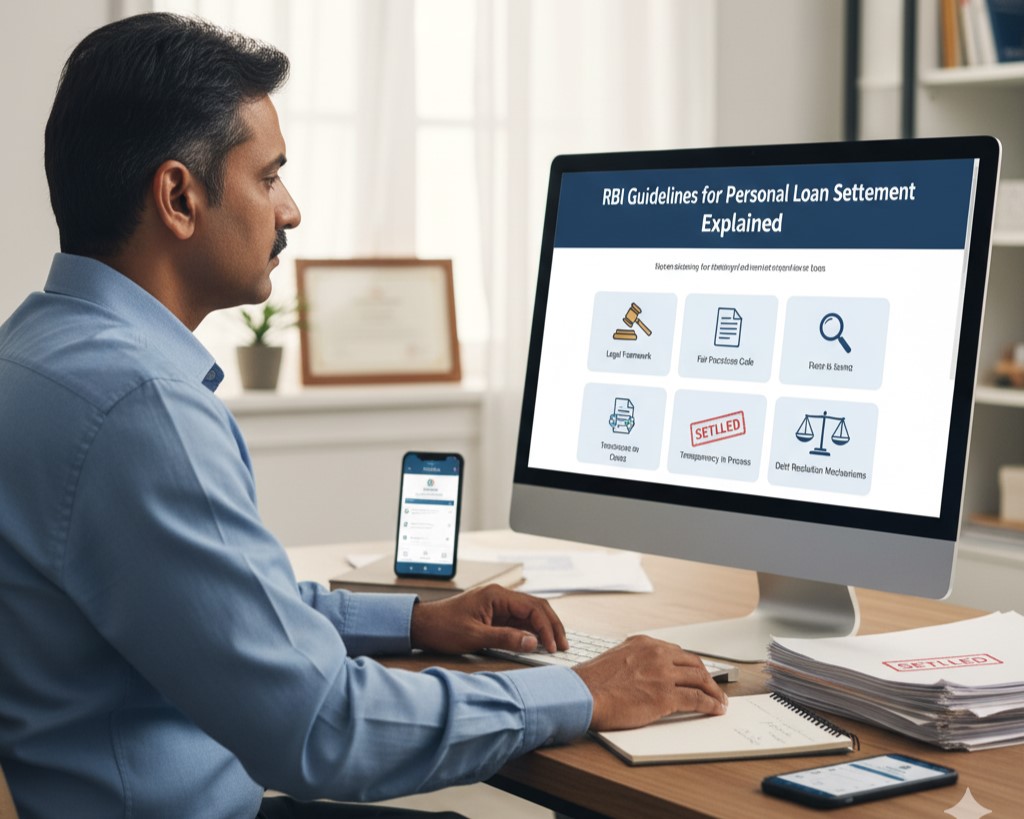
Facing overwhelming debt and considering a personal loan settlement? It’s crucial to understand the regulatory framework that protects you. The Reserve Bank of India (RBI) has issued comprehensive directives to ensure fair practice, transparency, and borrower protection during the debt resolution process.
At Settle Loan, we operate strictly within these RBI rules to secure the best, most compliant outcomes for you. Here is a clear explanation of the key guidelines that impact your settlement journey.
1. The Principle of Fair Practice and Harassment
While the RBI doesn’t directly dictate the exact settlement amount, its guidelines heavily influence the behavior of lenders and recovery agents.
- No Coercion or Intimidation: RBI rules strictly prohibit lenders and their recovery agents from engaging in coercion, intimidation, or using abusive language. This includes placing calls at odd hours (before 9:00 AM or after 7:00 PM).
- Borrower Protection is Paramount: If you are facing harassment, you have the right to file a formal complaint with the bank’s Nodal Officer and escalate it to the Banking Ombudsman. Knowing these rules strengthens your position when you Contact Us to begin your settlement.
2. The Mandate for Transparent Communication
The RBI requires clear and honest communication throughout the loan and recovery process.
- Upfront Disclosure of Fees: The bank must clearly inform you of all penal charges, fees, and interest rates, both at the time of loan sanction and when the account enters delinquency. This helps in the personal loan settlement negotiation, as your representative can challenge disproportionate or undeclared charges.
- Information on Resolution Options: Lenders are mandated to provide information on various resolution mechanisms, including restructuring and settlement, to borrowers facing hardship.
3. The Power of the No Dues Certificate (NDC)
This is perhaps the most critical document governed by the RBI rules in the context of settlement.
- Mandatory Issuance: After you successfully complete your personal loan settlement payment, the bank is obliged to issue a No Dues Certificate (NDC).
- Final Proof of Closure: The NDC is the legal proof that the entire outstanding liability on that loan is extinguished. Any attempt by the bank or its agents to collect on the written-off amount after the NDC is issued is a serious violation of borrower protection guidelines.
- RBI rules ensure that once an account is settled and the NDC is issued, the matter is permanently closed.
4. Guidelines on Penal Charges and Interest
The RBI has a clear stance on penal charges, designed to prevent lenders from inflating debt through excessive fees.
- Penal Charges as Punishment, Not Profit: The RBI states that penal charges should be reasonable and proportionate to the non-compliance (default), and they should not be capitalized (i.e., you shouldn’t be charged interest on the penal charges).
- Leverage in Negotiation: Your settlement partner can use these RBI rules to challenge excessive interest and penal charges applied to your loan, often leading to a lower final settlement figure and greater EMI relief than if you negotiated alone.
5. Credit Reporting and Resolution Mechanisms
The settlement status must be reported accurately to credit bureaus.
- Accurate Reporting: The bank must report your account status as “Settled” to the credit bureaus. While this negatively impacts your credit score, it is essential for the RBI to ensure the status is recorded truthfully.
- Why Settlement is Better: The RBI’s framework encourages settlement as a resolution method. Leaving the loan unpaid is far worse, as it keeps the account in a perpetual “Default” status. A settlement, guided by RBI rules, closes the chapter and allows you to begin credit rehabilitation.
Ready to Settle Loan with Confidence?
Navigating a personal loan settlement requires expertise in both negotiation and regulatory compliance. Knowing the RBI rules is your best form of borrower protection.
If you are ready to explore debt relief with the confidence that you are legally protected, Contact Us at Settle Loan today.